Guest Introduction
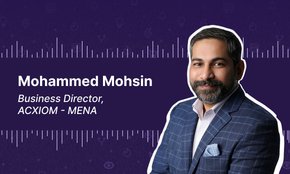
Devon Boyd: Welcome to the VWO podcast, where we speak with digital leaders and growth experts from around the world to understand how experimentation, user behavior, and data-driven thinking lead to real business impact. I’m Devon, your host for today. I run partnerships across EMEA, and I’m really happy to introduce today’s guest, Mohamed Mohsin.
Mohamed currently serves as Business Director at ACXIOM MENA, where he leads strategic initiatives across SEO, content, and conversion rate optimization. He works closely with enterprise clients and stakeholders to shape digital growth strategies, guide investment decisions, and lead teams to deliver measurable business impact. With deep expertise in digital acquisition and optimization, Mo brings a leadership perspective on how organizations can connect SEO, user experience, and experimentation to drive sustainable growth.
In this episode, we’ll explore the current state of CRO adoption in the MENA region, how behavioral insights can shift business mindsets, and what it takes for organizations to build experimentation into their digital growth strategy.
Hello Mohamed, welcome to the VWO podcast. Very excited to have you here today.
Mohammed Mohsin: Thank you for inviting, Devon. It’s a pleasure.
Getting to Know Mo
Devon Boyd: Before we dive into the deep content, I would love for our audience to get to know a little bit more about you and learn who Mo is. How have you ended up where you are today? What did you think you would be when you were a child, and how close or far away from that are you today?
Mohammed Mohsin: From a professional standpoint, I always wanted to become a lawyer. I was pushed to do my engineering, went into technology, and accidentally moved into digital. So I’m happy with what I’m doing currently. That’s my journey.
Devon Boyd: So you wanted to be a lawyer, ended up having a background in engineering, and now here you are today running experimentation across all of the enterprise clients.
Mohammed Mohsin: That’s how the journey has been so far.
Devon Boyd: It’s always the windy road to the outcome that we want. And what’s something exciting that you are working on right now — personal or professional?
Mohammed Mohsin: At a personal level, not many people know I’m an angel investor — I invest and evaluate startups and make investments at seed and pre-seed stage. From a professional level, I work very closely with large enterprise accounts and clients. My passion is to meet clients, understand their business requirements and pain areas, and then map those to our products and service offerings at Axiom.
Devon Boyd: Do those worlds ever cross over?
Mohammed Mohsin: Not really.
Devon Boyd: Not yet. Angel investing is a really cool place to be. I really want to ask if there are any people I should be looking out for, any interesting things up and coming — but I don’t think this is the right place to ask that, so we’ll follow up on another call.
Is there a moment or a project in your CRO journey that made you think, “Yes, this is exactly why I love doing this”?
Mohammed Mohsin: From a conversion rate optimization perspective, every client’s bottom line is: get me sales, get me acquisition, get me leads. Irrespective of whether CRO is present or not, CRO is basically a facilitator which helps facilitate that journey in a more decision-making format. All of our clients that we work with across performance marketing, SEO, content, and CRO — the ask is always: get us more leads, get us more acquisition, get us more conversions.
Devon Boyd: Have you ever walked into a conversation where they haven’t asked that — where instead they’ve asked about reducing returns, or reducing friction across the whole website for an amazing user experience?
Mohammed Mohsin: A lot of our clients also ask about UI/UX. From an SEO perspective, UI/UX plays a very pivotal role when we are optimizing the full funnel journey — from awareness to consideration to the lower funnel. UI/UX is a very important part of that journey, but again, it always comes back to: once that optimization gets completed, improve my bottom line.
Devon Boyd: And I guess the reason I like focusing on user experience and reducing friction is because it has the real impact on growth and loyalty, and therefore customer lifetime value — versus just “let’s increase conversion rate.” It’s the same thing, but rather than looking at a first-order metric, you’re looking at second or third-order ones to really understand why people are coming in and buying, or behaving the way they do.
CRO Awareness and Maturity in the MENA Region
Devon Boyd: From your vantage point in the UAE and the broader MENA region, how would you describe the current level of CRO awareness and maturity among brands? And what do you see as the single biggest structural barrier to serious experimentation in the region today?
Mohammed Mohsin: In this region, especially in the UAE and across the regions that I manage — I manage across GCC — the pattern I’ve seen is that there is awareness of conversion rate optimization. It’s just that the maturity is evolving. It’s so important for agencies and partners like us to go back to clients and explain the intricacies and the beauty of CRO as a discipline, and not just as one-off activities.
In the entire journey, what I’ve noticed is that whenever budget allocation is done, it’s always done based on certain end goals — acquisition, improving your revenue, scaling up brand campaigns. CRO plays a very pivotal role in improving this journey from awareness to consideration to acquisition. It’s definitely evolving, and the partner has to play the right role in ensuring every client is well educated.
Devon Boyd: When you are starting new business projects with clients, do you find that they come with a level of maturity in CRO, or do they just know it exists and want to do it? Are you typically taking them from a starter level up to a more mature experimentation setup — building a culture of experimentation with them?
Mohammed Mohsin: Initially, for my clients it’s predominantly at a very starter level — we have to handhold them and make them understand what CRO is. Currently, if I were to put it very bluntly, CRO for them is just AB testing: landing page A and landing page B, compare it with your Google Analytics data. That’s it. But there is much more outside of AB testing that CRO can offer. Right now it’s essentially more about educating the client in a very systematic way — what CRO is and how it can help.
When CRO Enters the Conversation
Devon Boyd: When does CRO typically come into the conversation?
Mohammed Mohsin: It’s essentially a maturity curve. Let’s take a few examples. If the brand is relatively new, we always go for setting up the basic foundation — the website needs to be extremely strong from a technical perspective, from a discoverability and visibility perspective. That’s where SEO comes in: having the right content, the right technical optimizations done. That’s the basic.
If the client has already done this for a couple of years and is investing into performance marketing — Google Ads, TikTok, Facebook — we try to understand if it’s only from a brand perspective to drive traffic. Phase two is basically to scale up traffic to the website or to the app.
The final stage is once the client reaches that maturity level where the basics have been set out, the hygiene is done, the content is right, the SEO discoverability and visibility is done, and the client says they’re going to invest heavily into performance marketing. That is where we bring in the intersection of conversion rate optimization.
Devon Boyd: That makes sense — getting traffic to the website is one thing, but if the website’s not converting, it’s a bit of an issue. And it makes sense to hear you say CRO comes once people have those other motions in progress. It also makes sense from the revenue perspective: paid ads very clearly has a direct correlation to traffic and acquisition. Then proving experimentation — in an immature way, people presume CRO sits on the same budget line as SEO or paid ads, and having that conversation to shift that level of maturity must be quite fun to watch with those aha moments.
Mohammed Mohsin: Absolutely. Our client journey is approximately four-plus years on average, so we get the opportunity to introduce the right product at the right time.
Tech Stacks and Behavioral Insight Tools
Devon Boyd: Do clients typically come to you with an existing tech stack — maybe a behavioral insights tool, heat maps, session recordings, surveys? Or do they come saying they want to start AB testing and you have to go back to them and say you also need all of this behavioral insight stuff?
Mohammed Mohsin: When we start talking about the performance marketing journey, we try to find out what tech stacks they have. Is GA4 properly set up? What is the level of tracking — how many events do they track? These are the prerequisites we check. And then we introduce the platform, saying that while GA4, your Google Search Console, your AppsFlyer or Firebase is good to have, there’s a limit to how much data we can derive from there. From a platform perspective, it’s more than just data — it gives you heat maps, click maps, recordings of views. All of these details come across when the platform is introduced.
Devon Boyd: Have you ever had an example where you’ve used session recordings or heat maps and shown user behavior almost in real time, and just seen the client’s face visibly go, “Oh, we should change that”?
Mohammed Mohsin: Not really, to be honest — I didn’t have that opportunity to demonstrate on a live platform. But in terms of when we introduce a platform like VWO at Axiom, we always understand the client’s business pain area and then do a test campaign. The test campaign essentially helps build the level of confidence the client has after seeing the results.
Devon Boyd: What does that typical client engagement look like? You’ve mentioned maturity, tech stack, and that the client lifetime is around four-plus years. What does that plan look like?
Mohammed Mohsin: Once the client sends the brief, we understand whether it’s SEO-heavy, content-heavy, UX-heavy, or if there are any CRO components. Whenever they mention UI/UX, the client has some sense of CRO — even if it’s primitive. That’s where we get a chance to pitch our CRO capabilities.
Then we understand whether the client is a compliance client or a non-compliance client, because there are a lot of nitty-gritties we need to convince — the IT and compliance teams — to ensure that codes are being updated. Without those details, CRO is not going to move ahead. We do all of that heavy lifting upfront, understanding the entire journey and who’s who within the client’s network, so that if the client decides to work with us, it becomes easy to navigate all of the prerequisites.
Handling Losing Tests and Building Client Trust
Devon Boyd: Experimentation has a lot of trial and error to it. When you base hypotheses in the data and the insights — the quant and qual — you can reduce that error margin. But how do you explain that to your clientele? If you have a losing test or a losing variant, how do you explain that it should build trust rather than lose trust in the process?
Mohammed Mohsin: Before we even start introducing CRO, we need to get a sense of how adaptive they are to it — is it only at the level of the point of contact we’re talking to, or is it resonating back to the upper level? We always encourage our clients to do an experiment, and with our partners we do that experiment, so the client does not carry that risk. It’s basically the agency like Axiom and a partner like VWO that carry that risk.
I’ll give you an example of one of our fashion clients where the urgency messaging we pushed did not work well. When we checked why it didn’t work, we found that brand trust and product trust were weak, and CRO optimization amplified that — and that’s where it backfired. When we checked the client’s reviews and ratings, they were way below industry standards. That’s why our CRO test did not move it up. We discussed this with the client and said: let’s fix the basics and then move on to this.
Devon Boyd: So you ran what was essentially a social proof or urgency campaign, but pushing people to take action had a negative impact because of the existing trust issues with the brand?
Mohammed Mohsin: Exactly. And that backfired.
Devon Boyd: Good example. And every test is a win — whether through actual uplift or through the learnings you take from it. In that example, you learned so much from the test failing. If the test had been successful, you might not have learned those things. I imagine quite a few iterations of the experimentation program came off the back of that.
Mohammed Mohsin: Absolutely. We went back to the client honestly, with very transparent details. We said: we experimented this based on our mutual agreement, but this test did not work — and here are the hard hypotheses. When we cross-checked, we found that reviews and ratings were very poor, hence brand trust and product trust were poor, which got to our CRO optimization and meant it didn’t work. The client really loved that learning. They said, “Okay, I need to go back to my basics and fix that before I invest further.”
How CRO Maturity Impacts Other Channels
Devon Boyd: As you see these clients mature, how does it impact the effectiveness of all the other channels — the paid media, the SEO, lifecycle marketing? Where all of a sudden they start saying, “Here’s an idea, let’s just test it.” Do you see that impact surrounding departments or channels?
Mohammed Mohsin: We do that optimization — let me give you an example. One of our clients where we manage a lot of advertising: SEO, content, CRO, and paid campaigns. The most important thing is that if CRO benefits are going to be passed on to different channels, the first thing we need to know is whether the landing page being optimized or targeted is the same across all channels.
If SEO is targeting a different set of keywords to a different landing page, and in performance marketing the destination URL is different, then the whole landscape of optimization changes. But for simplicity, let’s take an example where my website landing page is the target landing page for all channels. Then the beauty of CRO enhances — everybody benefits. It’s like killing two birds with one stone.
When we optimize, we take data from all channels through GA4 — we understand what traffic is coming from direct, from paid channels, from organic, from social — and once we optimize that landing page, the benefits are passed across to all those channels. I come from SEO and content at heart, but I also understand performance marketing equally well. That’s how we optimize to pass the benefits across the journey.
Devon Boyd: Do you ever see a pre-CRO and post-CRO mentality — where the impact on annual planning or budgeting and campaign calendars shifts from a very fixed status to a more agile one, with “if A then B” statements appearing a lot more?
Mohammed Mohsin: I haven’t honestly come across that with my clients, because budgets are always capped. The CMO and CFO will lock in the budget for a particular campaign — total advertising, which is offline plus digital, and digital specific for performance, content, SEO, and CRO.
But the most important thing is we go back to the client and say: it’s a great budget, we’d love to work with it. My humble submission is: how much of a percentage would you be willing to share for experimentation or innovation? The client might say it’s a $10 million budget — getting $100,000 of that budget is a big challenge. We need to put a very strong case for what kind of experiments we’re going to do or what kind of innovation we’re going to bring, so the client can internally sell and convince the CFO and CEO to give that extra hundred thousand.
Then the client comes back and asks: what’s the uplift I’m going to get on my conversion? So we keep it framed as an experiment and innovation budget — that way we can keep testing across the journey. This also depends on the lifecycle and maturity of the client’s digital journey. If the client is extremely mature, it’s much easier. If the client is very nascent or primitive in their journey, it’s tougher. The key is how we articulate it and get that additional 10–20% to introduce CRO and keep testing.
Devon Boyd: So it comes as a premium piece of what you’re offering — and it takes a lot of convincing that continuous optimization and reinvestment is important. I liked the point you made about moving the mindset from “this is just going to increase your revenue” to “this is an R&D budget for all of the teams driving revenue.” We don’t typically talk about R&D for marketing teams, but it’s very much a real thing — and it keeps the brand alive. The people really adopting experimentation are just evolving over time, so the need for a whole website overhaul is more rare.
Cross-Team Collaboration and Feeding the Backlog
Devon Boyd: Where you are impacting lots of other teams, how do you get them to consistently feed into experimentation programs? What does that cross-team collaboration look like and what feeds the backlog?
Mohammed Mohsin: If an agency like us has an account that manages all of the SEO, CRO, content, and performance marketing, it’s much easier to control versus multiple agencies managing different things. If all of the client’s services are with Axiom, it’s pretty straightforward — the entire control is with us, so team coordination across SEO, content, UI/UX slash CRO, performance marketing, digital PR — everything is in control because it’s our team navigating across those teams.
On the other flip side, let’s say we are the CRO agency and the SEO agency is Agency A and the performance agency is Agency B. That’s where the challenge starts — because CRO is also looked at as a threat. If I’m going to introduce CRO, another agency’s media expenses will technically come down. So it becomes challenging, and as an agency, we have to convince the client to give us the mandate to push back to the other agencies and say we need to experiment. Navigating with different agencies has a different challenge entirely — there’s no one strategy in place.
Devon Boyd: Just to clarify — when you say reducing media spend, is that from the sense of needing to take some of the budget and move it towards CRO, or is it from the perspective that if the website is converting higher, you don’t need as much media spend?
Mohammed Mohsin: The latter — if the website is converting higher, you don’t need as much media spend. A higher conversion means the revenue levels out naturally rather than having to drive a load of traffic.
Devon Boyd: I’d never thought of it in terms of CRO threatening other people working within that area — and that’s not just agencies, that would be internal team budgets as well. That’s a level of politics I’ve not really thought about. One of those aha moments. Nice.
Platform Capabilities and the Tech Stack
Devon Boyd: In terms of capabilities and what brands should look for in an experimentation program — specifically in the MENA region — what would you say the platform or tech stack needs to offer to support their journey at each stage of maturity?
Mohammed Mohsin: The tech stacks we essentially look at include our proprietary tech stack and the third-party tech stacks that we invest in. Within the CRO platform, the capability for deep analysis — heat maps, click maps — all of these details are so important to the CRO journey for the client. And of course, the AI capability as well.
AI’s Impact on CRO
Devon Boyd: The rise of AI and how it’s reshaping marketing — personalization, decision making. What do you think the impact on conversion rate optimization specifically will be? What do you project?
Mohammed Mohsin: In my opinion, we work with a lot of AI platforms and have built our own AI bot that we use extensively. When AI is integrated with conversion rate optimization, it enables faster hypothesis generation, smarter personalization, and better decision making. If we can automate the testing of multiple variants and target content very specifically, we can definitely see an uplift in conversions for any client. That’s how I look at how AI is going to leverage CRO going forward.
Devon Boyd: You mentioned a proprietary AI bot that you’ve built at Axiom. Can you share a bit more?
Mohammed Mohsin: It’s essentially built on a lot of different platforms that we’ve integrated, and it’s used to do persona segmentation for our clients. A classic example: if a bank is launching a new credit card — say it’s a high-net-worth credit card — and they come back to us and say they want to target certain credit card users, we use different data sources through our bot to build out who to target.
Devon Boyd: That’s really interesting. I see the future of agencies in particular becoming masters of every single company’s AI agents. We’re always talking about our AI tech — now we’re building one here, someone’s building one over there. But no one’s really talking about how they all connect. That’s where agencies come in and say: we’ve been integrating tools for years, and now what we’re doing is orchestrating your agents instead. That role is going to become the perfect role for agencies — helping clients say, here’s your tech stack, here’s how all of the agents tie together to deliver value beyond the sum of the parts.
The Future of Experimentation in MENA
Devon Boyd: Looking at the next five years — how do you expect experimentation adoption across the MENA region to evolve? Is there a mindset shift that needs to happen amongst senior leaders?
Mohammed Mohsin: In terms of adaptation, as I said, a lot of education is required. Awareness is there — it’s just that the deeper level of understanding needs to be built. I think when high spenders like FMCG or banking segments understand CRO at a deep level, a lot of other brands like e-commerce will also follow. The level of maturity will definitely grow as self-learning is initiated, and as partners continue going across and educating clients. The way I’m looking at it is: the same way CRO has evolved and matured, the same way performance marketing has evolved and matured — I would love to see CRO become a part of every marketer’s marketing mix. But it starts with education.
Devon Boyd: And that’s where tools like VWO really come into play — the market education piece being so key, working alongside partners to build that inside the marketing community and the product community.
Rapid Fire Round
Devon Boyd: What’s something that you are currently learning — work-related or not?
Mohammed Mohsin: Professionally, I keep learning — and personally too. Personally, which companies are good, which have a growth rate. From a professional side, I keep learning about different AI platforms, how to evaluate any brand on generated engine platforms and how they’re performing. I learn through YouTube channels, blogs, industry experts — how the industry is moving, what shifts are happening, what new technologies are being adopted. This helps when you’re talking to clients.
Devon Boyd: What’s the best piece of advice you’ve ever received — a mantra or learning that has traveled with you through life?
Mohammed Mohsin: Listen more than you talk. Being with clients, it’s always in our nature to keep talking. But how do you ask the relevant questions where the client talks more and you listen more — and you make notes? I’ve been practicing this. What are the open-ended questions? What are the close-ended questions that you ask clients? The clients start talking and giving you more information, which helps you build a case to go back to them and say: this is how we can help you.
Devon Boyd: Can you give an example of where just listening has helped so much more than talking?
Mohammed Mohsin: From a health perspective — from an approach perspective — what are the open-ended questions versus close-ended questions? When clients start talking and giving you more information, you can build a case to go back and say, this is how we can help you.
Devon Boyd: That active listening component has such a big impact — and it goes beyond just listening to hearing, understanding, and the empathy that comes with that. A nice piece of advice.
Devon Boyd: If you were starting your career today with a focus on optimization and experimentation, what is the one thing you would do differently?
Mohammed Mohsin: I would basically convince the client to go for the experiment. There are a lot of clients who hesitate because they are very risk-averse. I would definitely do things differently by mitigating that risk and encouraging the client to go for a trial experiment before making a decision.
If there is no risk to the client — if I go back to a client and say, you’re doing a significant amount of spend, and if I were to evaluate how we can add value to improve your conversion, would you give us a chance? We pick up a few experiments and go back to the client and say: this is what we did, this is how we can help. A few case studies go a long way. They might say right now there’s no budget — that’s fine. Eventually when the budget opens up, they’ll definitely invite us for a discussion.
Devon Boyd: What’s the one thing your non-industry friends just do not understand about your job?
Mohammed Mohsin: They don’t understand anything. All they basically understand is that I’m in advertising — digital advertising. The simplest way I explain it is: the ad that you see on TV is similarly the ad that you see on the internet. That’s what you manage.
Devon Boyd: Podcast, AI — we’ve spoken about it quite a bit. What do you think AI is going to take over in the next three years?
Mohammed Mohsin: Let’s take back the journey — when the telephone was invented, then TV came in, then the internet, and now it’s AI. The way I look at it is that AI is playing a very significant role in voice. Anything to do with voice — a simple cold call, a simple service call — can be replaced by AI to a great extent. As we speak, it’s being experimented with. With the right data models backing it, it could be a very interactive conversation without needing a human.
Devon Boyd: Do you think we’ll lose the human touch? And that it will then get re-optimized back in — where maybe the premium level of customer experience is human-to-human interaction?
Mohammed Mohsin: I would think the premium engagement would be human-to-human. At a certain point, AI becomes too monotonous — it’s based on templates. If you want to discuss certain ideas or innovations that are outside of the template or outside of the book, only human-to-human can have that discussion.
Devon Boyd: Do you think at some point AI will pass the Turing test and we won’t know we’re talking to an AI bot?
Mohammed Mohsin: I mean, I receive so many phone calls — it’s really hard to say whether you’re speaking to an AI or a real person. In the conversation, you eventually figure it out. Yeah.
Devon Boyd: On that note — if we’re replacing humans with AI, and following the money, there’s a revenue impact. What is one CRO metric that you wish people would stop obsessing over?
Mohammed Mohsin: Uplifting conversions.
Devon Boyd: This one is so nice. When people say to me, “Devon, I want uplift in conversions,” I’m like, oh, it’s really easy — just move everything so it costs zero dollars. Drop the price to zero, give it away for free, and you’ll have mad conversion uplift.
Mohammed Mohsin: Exactly — and we go back to the client with that, and of course it’s an estimation. If we say that for X number of testings you’re going to do, you’ll see X number of uplift — we do that math, make that calculation, and ensure we meet or exceed that expectation.
Devon Boyd: Brilliant. And what is a dream or a goal that you want to achieve over the next three to five years?
Mohammed Mohsin: I’ve been in tech, I’ve been in digital, I’ve been on the investing side of things — I would want to move more onto the investment side. That’s my goal. And also to start consulting and training new founders — how to become an investor, how to evaluate a company if you’re a founder coming across to get initial funding, and if some part of the money is going to get invested into digital, that’s where I will add value.
Closing
Devon Boyd: Mo, thank you so much for sharing your perspective on how experimentation is helping organizations, what you think the state of the market is, and how you see the MENA region and its future growth. It’s been really cool to share this time with you — I’ve learned a lot, which is always great. I hope all of our listeners will also take a lot away.
Thank you to the audience for tuning in. If you’d like more insights from industry leaders, be sure to subscribe to the VWO podcast and stay tuned for our upcoming episodes. Mohamed, once again, thank you so much for spending the time and taking the time out of your day to be with us.
Mohammed Mohsin: Thank you. It was a pleasure. Thank you for inviting.