
 ChatGPT
 Perplexity
 Gemini
 Claude
 Grok
Grok
The way marketing teams work has changed. AI is now a regular part of the day-to-day: used to write copy, pull together research, explore new ideas, and cut down on manual work. For experimentation teams, that’s no different.
After a test wraps up, it’s become common practice to reach for a general-purpose AI tool. Teams export results, grab screenshots, pull together performance notes, and drop everything into something like ChatGPT with questions like:
- “What can I take away from this test?”
- “Walk me through what happened in this campaign.”
- “Why did we see different behavior on mobile?”
- “What experiment should we run next?”
- “Help me build a hypothesis from this data.”
It makes sense. Experimentation teams are expected to move quickly, make sense of complex data, and keep a steady pipeline of test ideas flowing. AI feels like a natural shortcut.
The problem? General-purpose AI tools were never designed with experimentation in mind.
They have no visibility into your test setup. They don’t know your variations, your traffic allocation, your success metrics, your audience segments, or how this campaign connects to the last one. They can’t take you from an insight directly to your next experiment inside your platform.
Put simply, generic AI can be helpful, but it operates in isolation. That’s exactly why experimentation AI needs to live inside your testing platform.
The downfall of a copy-paste AI workflow
On the surface, pulling data into an external AI tool seems like a time-saver. Export a report, paste it in, ask a question, and get an answer. Fast and easy.
But the cracks start to show quickly. Before you can even ask a question, you need to manually compile the right information — campaign details, results, audience breakdowns, goals, and business context. Miss a key detail, and the AI will still give you a confident-sounding answer. It just might not be the right one.
And even when the answer is useful, the workflow hits a wall. The AI might point you toward a new test idea, but you’re still the one who has to go back to your platform, locate the right page, configure the experiment, set up metrics, define your audience, and check everything before launch.
The result is a workflow that’s split across too many places: your data lives in one tool, your AI in another, and your campaign setup somewhere else entirely. For teams trying to build a serious experimentation practice, that kind of fragmentation is a real drag on speed and scale.
Wingify’s AI layer
AB Tasty and VWO are joining forces to become Wingify.
If you’ve used AB Tasty’s Evi or VWO’s Copilot, you already know what it looks like when AI meets experimentation. Wandz, Wingify’s combined AI layer, takes that a step further — not as a standalone add-on, but as intelligence woven throughout the entire platform.
From campaign setup and audience targeting to results analysis and hypothesis generation, Wandz is present at every stage of the experimentation journey. It’s not just smarter AI. It’s AI built for experimentation, and it’s finally in the right place.
Bringing intelligence into the workflow with Wingify’s AI layer
Wandz, Wingify’s AI layer, is built to close the gap between data and action by embedding AI directly where experimentation happens.
Rather than copying results into an external tool, teams can ask questions in plain language, right inside the platform. Wandz acts as a smart interface between users and their experimentation data, making it easy to dig into campaign performance, compare results across segments, surface new ideas, review test configurations, and figure out what to do next, all without leaving the dashboard.
Teams can ask things like:
- “What happened with our homepage headline test?”
- “How did this campaign perform on desktop compared to mobile?”
- “Pull up every test we’ve run on the checkout page.”
- “What could we do to reduce cart abandonment?”
Because the AI layer is connected directly to the experimentation environment, it can surface the details that actually matter: variation descriptions, traffic splits, hypotheses, primary and secondary metrics, report links, and where a decision currently stands.
That’s the fundamental difference between feeding copied data to a generic AI and working with an assistant that already understands the full picture.
The point isn’t how fast AI responds. It’s whether it responds with the right context.
From results to what comes next
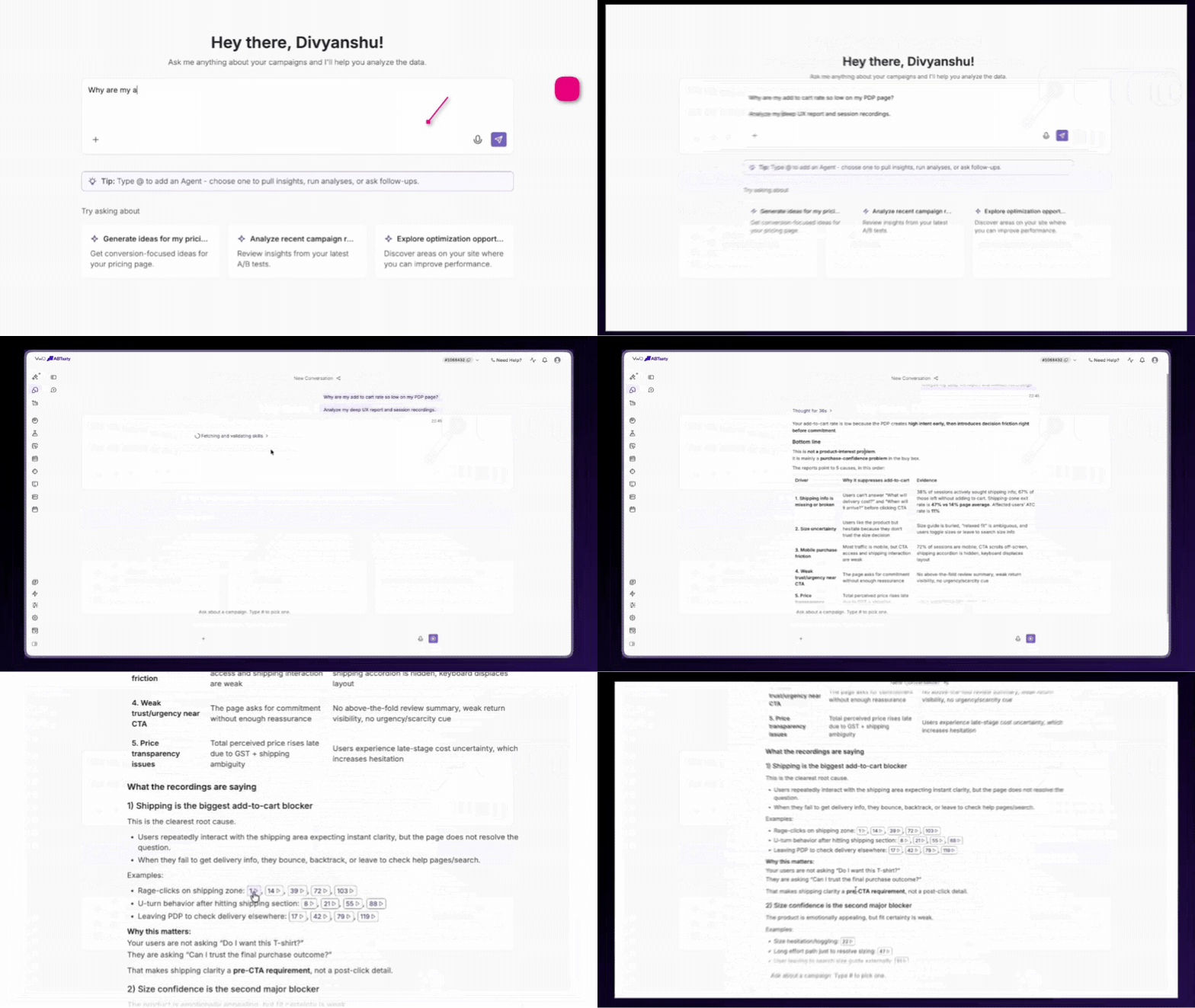
The most valuable thing AI can do in experimentation isn’t recapping what already happened. It’s helping teams figure out their next move.
Wandz, Wingify’s AI layer, can generate experiment ideas grounded in actual campaign performance, user behavior patterns, and business objectives. Teams can also bring in external context, including competitor screenshots, design mockups, project briefs, and user research, so that recommendations are shaped by both test data and the broader business picture.
The outcome: faster movement from results to well-formed hypotheses, with ideas rooted in evidence rather than guesswork.
AI that helps you build, not just advise.
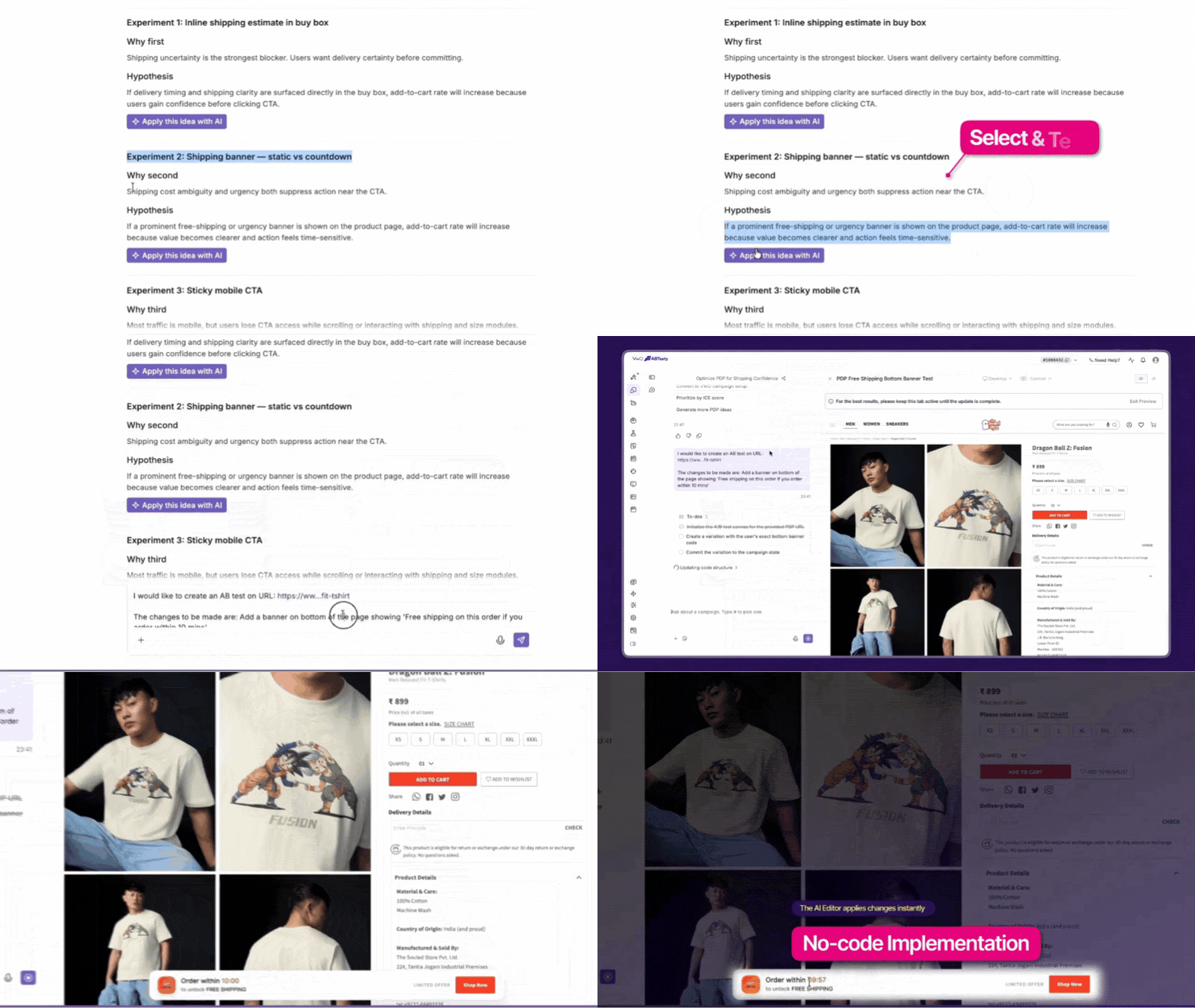
Most general-purpose AI tools stop at making suggestions. Wandz goes further.
It can review campaigns before they go live, checking configurations like metrics, audience targeting, traffic allocation, and goals to flag issues that might cause problems down the line. That’s an extra layer of quality assurance built into the workflow, not bolted on afterward.
Wandz also powers an AI Editor that lets users build or adjust campaigns using natural-language instructions. But this doesn’t mean handing over control. Teams can review every change, make adjustments, and stay in charge of the decisions that matter. Wandz accelerates the work without replacing the judgment behind it.
Stop sending your data to AI. Let AI come to your data
The popularity of general-purpose AI tools tells us something important: teams want to work faster, analyze more, and generate better ideas. That appetite is real.
But for experimentation, the copy-paste approach has a ceiling. It creates friction, strips away context, and puts distance between insight and action.
Wandz brings AI into the experimentation platform itself, where it can draw on campaign context, performance data, audience segments, metrics, and supporting documents in real time. The result is sharper questions, faster answers, stronger test ideas, and a clearer path from analysis to execution.
Because the future of experimentation isn’t just about having more AI. It’s about having AI that’s actually part of the work. Request a demo to see Wandz in action.
Categories: