 DE
DE
 BR
BR





 ChatGPT
 Perplexity
 Gemini
 Claude
 Grok
Grok
The 5-Step Framework That Stops Teams From Losing Their CRO Learnings

A lot of teams run experiments. But only a few capture their full value.
Here’s the pattern most testing teams follow:
- Run continuous tests
- Uncover key insights
- Notch a few wins
And then?
The learnings remain hidden in Slack threads, lost in spreadsheets, or forgotten in someone’s inbox.
Months later, when a similar challenge arises, you’re forced to start from scratch.
Vinayak Purshan, Associate Marketing Director at Cashfree Payments, spoke about this gap extensively on the VWO Podcast.
During the episode, he shared a robust system his team follows to capture, share, and reuse insights, so learnings from every experiment fuel the next one.
Vinayak’s 5-step framework for documenting CRO learnings
Cashfree Payments, one of India’s leading payments technology companies, powers payments for more than 800k businesses.
In a sector where trust, security, and speed are non-negotiable, the team has built a culture of experimentation that balances bold ideas with rigorous standards.
This framework isn’t just for the fintech space, though.
It’s a blueprint for compound learning that can upgrade any testing program from ‘good enough’ to ‘exceptional’.
Step 1: Document every experiment with complete context
The foundation of Cashfree’s approach is based on comprehensive documentation that goes beyond surface-level results.
Every test receives a detailed record covering four essential elements:
- Original hypothesis
- Experimental setup
- Quantitative results
- Qualitative insights
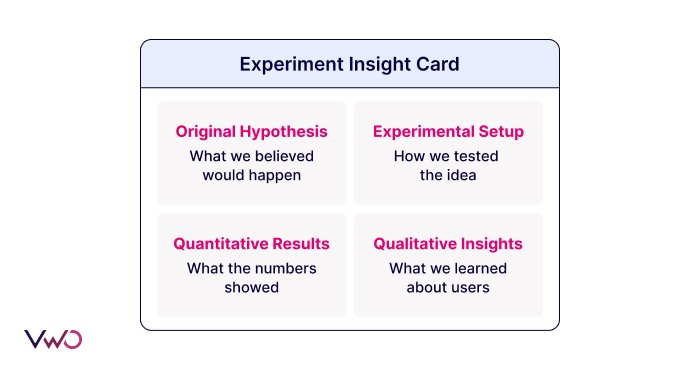
This documentation standard applies universally, from small copy changes to major page redesigns.
At Cashfree, we generally don’t treat experiments as isolated campaigns. Every test that we run is documented—whether it’s a win or a loss.
– Vinayak Purshan
The key lies in capturing not just what happened, but why the team believed it would work and what they learned about user behavior.
- When a test fails: Document the disconnect between assumptions and results.
- When a test succeeds: Identify elements of the hypothesis that proved correct and those that were coincidental.
Step 2: Create structured knowledge-sharing rituals
At Cashfree, experimentation insights don’t stay siloed.
The team hosts monthly all-hands marketing meetings where both wins and failures are celebrated with equal enthusiasm.
These sessions act as learning labs where teams dissect what worked, what didn’t, and the principles that can guide future tests.
Each meeting follows a simple format:
- Celebrate wins with a clear breakdown of why they worked
- Examine failures with a focus on learning, not blame
- Connect insights to larger strategic goals
The result?
A culture of psychological safety that encourages risk-taking, while ensuring valuable lessons are shared across the organization.
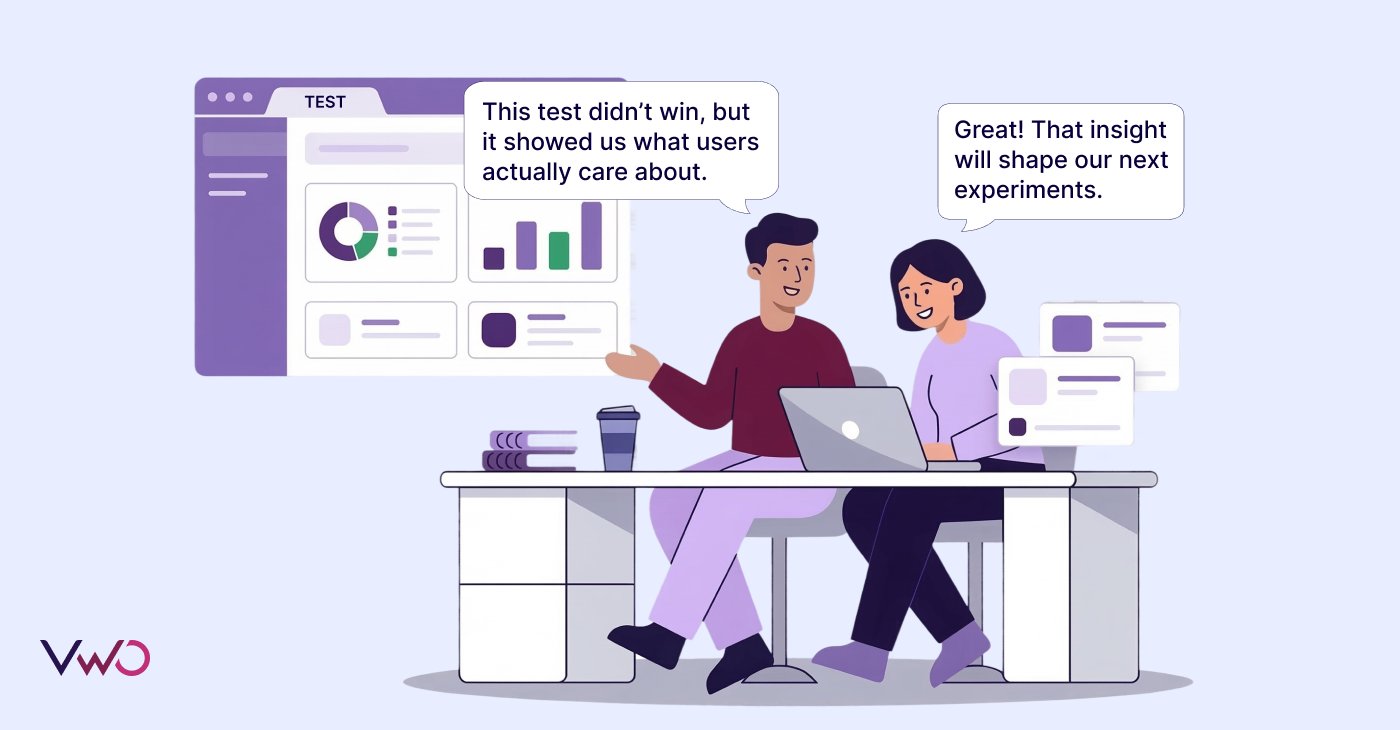
For instance, VWO lets you create sub-accounts so different teams can run their own experiments while staying connected.
Marketing folks can have one sub-account, product can have another, and customer success can run their own tests, all while everyone stays informed about what other teams are learning.
This structure makes knowledge-sharing rituals more effective because teams can easily reference and learn from each other’s work without losing autonomy.
Step 3: Share testing insights across departments
One of the most powerful parts of Cashfree’s framework is that CRO learnings don’t stay locked in marketing.
They’re shared across product, sales, and customer success, multiplying their impact.
We use digital marketing to get traffic, but with these experiments, the product marketing team gets valuable insights about what USPs work, what messaging resonates, and who we want to sell to.
– Vinayak Purshan
This creates a feedback loop where:
- CRO insights shape product roadmaps.
- Product improvements spark new testing opportunities.
- Sales teams learn which value props and features matter most to customers.
While this step requires deliberate communication and stakeholder buy-in, the payoff is a company-wide learning engine that goes beyond just a marketing playbook.

Example in practice
A SaaS company is testing different value propositions on its homepage.
The tests reveal that “set up in 5 minutes” resonates 3x more than “enterprise-grade security” for small business owners.
When such a strong insight is shared across the organization, it can guide the strategies and initiatives of other teams, such as:
- Sales folks can restructure their pitch decks to lead with speed and ease of use for SMB prospects
- Product can reprioritize their roadmap to streamline the setup process even further
- Customer success can update onboarding materials to highlight the quick setup first
- Content marketing can create case studies focused on rapid deployment stories
One experiment’s insight becomes a company-wide strategic direction, only because the documentation and sharing systems make it impossible to ignore.

Use VWO Plan to organize experiments by priority, track impact on core metrics, and maintain a steady testing pipeline. Product folks can add test ideas inspired by marketing insights, while sales can flag messaging hypotheses based on customer conversations, all in one shared space.
Step 4: Prepare reference documents for each campaign
In the fintech space, demand follows certain cycles. For instance, eCommerce sales ramp up before festive seasons, while other industries have their own peaks.
Instead of reinventing campaigns each time, Cashfree maintains reference documents or libraries that organize past experiments by theme, season, audience, and objective.
We might run an experiment today, or a festive campaign six months down the line. There might be another team member who wants to learn from the mistakes we made in the past or from the successes we had.
– Vinayak Purshan
These libraries enable teams to:
- Reuse insights for future campaigns
- Plan around seasonal demand with precision
- Share past learnings with new team members for faster onboarding
The result: smarter campaigns, less guesswork, and compounding knowledge.
Example in practice
A payment gateway provider is preparing for their annual tax season campaign.
A team member accessing the campaign library finds documentation from last year’s tax season experiments.
The library shows that compliance-focused messaging (“Stay audit-ready with automated reconciliation”) outperformed speed-focused messaging (“Process payments 3x faster”) by almost 30% among accounting software providers.
The documentation includes full context:
- Audience segment: Accounting SaaS platforms, 500-2000 transactions/month
- Timing: 8 weeks before tax filing deadline
- Key learning: Compliance-focused messaging is more effective during tax season
Instead of starting from scratch, the team member can now build on last year’s winner and test compliance messaging against risk-reduction messaging.
They can also apply the same compliance-first principle to email campaigns and sales collateral to create a consistent experience across channels.
Step 5: Foster a learning-first experimentation mindset
The most important piece of Cashfree’s documentation framework is cultural:
Learning matters more than being right.
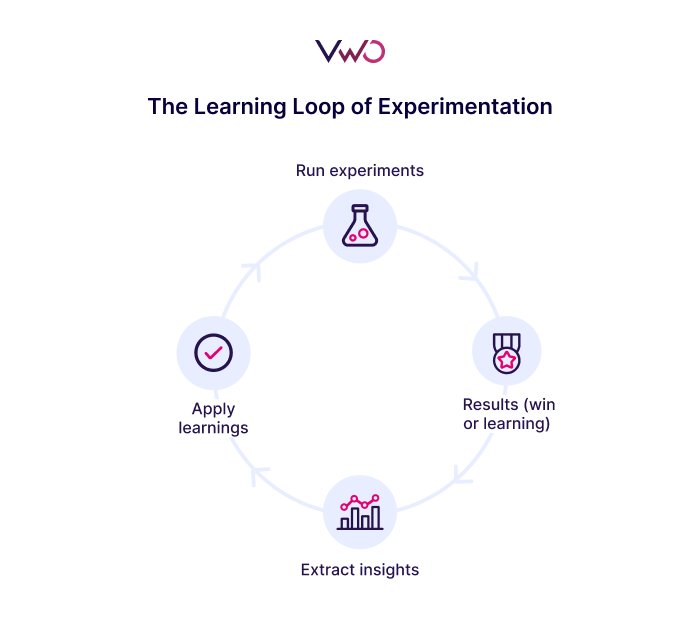
This mindset encourages bold testing, where both wins and failures fuel growth, and also builds a culture where:
- Teams feel safe while sharing ‘failures.’
- Insights are more valuable than short-term wins
- Experiments generate clarity, not just results
There is a saying that people learn from their past mistakes. We want our team members to learn from the mistakes we made, because you can’t always learn from making mistakes yourself.
– Vinayak Purshan
Grab this free eBook to explore real-world examples of brands that have successfully used experimentation loops to achieve impressive growth.
Building your own CRO documentation process
Cashfree’s framework demonstrates how you can go from a series of isolated tests to a strategic learning system.
While this approach requires long-term commitment, structured knowledge sharing, and cultural support, it enables teams to focus more on generating clear, actionable insights rather than just achieving short-term wins.
To hear Vinayak’s complete insights, you can tune in to the episode on VWO, Spotify, or any other platform where you get your podcasts.
Schedule a demo with VWO to explore how you can scale your optimization efforts and build a CRO culture that drives learnings and results.
Categories: