
 ChatGPT
 Perplexity
 Gemini
 Claude
 Grok
Grok
Every interview of CRO Perspectives is a chance to learn from the people shaping how businesses grow, not just through data and experiments, but through mindset, grit, and real-world lessons.
For our 24th post, we continue that journey with an interview that reminds us that the most powerful ideas often come from firsthand experience, not just frameworks.

Leader: Mayowa Aderogbin
Role: Head, Business Marketing, Pierrine Consulting
Location: Nigeria
Why should you read this interview?
Mayowa brings a deep, hands-on understanding of how to turn data, tools, and technology into real business growth.
From A/B testing and CRO to campaign budget management and LTV optimization, he’s mastered the product marketing levers that move the needle. His work spans SEO-driven content strategy, CRM performance, omni-channel campaigns, and experimentation frameworks that are tightly aligned with business goals.
Fluent in Martech platforms like HubSpot, Zoho, Salesforce, and analytics tools like Google Tag Manager, Ahrefs, and SEMrush, Mayowa knows how to connect the dots between insight and execution. His grasp of digital analytics, funnel performance, and growth hacking makes this interview a goldmine for anyone looking to build a tech-enabled, experiment-driven marketing engine.
If you’re exploring how to make smarter, more scalable decisions through experimentation, this is a must-read.
Product’s role in B2B vs. B2C
The role of product in both B2B and B2C is evolving from a transactional function to an experience-led proposition. In B2C, the shift is toward personalization, emotional engagement, and speed, buyers expect as much intuitive design, instant gratification, and brand resonance.
However, despite the fact that the B2B buyer prioritizes value delivery, seamless integration, and ROI clarity, they also want as much engagement and intuitive design. As more products cover the basics, and integrations become more commonplace, B2B products are being expected to do a lot more for the user now; -centricity and data-driven iteration being at the forefront of this overlap between the expectation of users from B2B and B2B products.
Experimenting for non-linear journeys
Growth today is non-linear, and so our experimentation mindset must capture this hydra-headed journey across various touchpoints. Teams need unified data lakes that track cross-device behavior, and agile testing frameworks that account for messy journeys, not ideal paths.
Start with a small number of high-value data sources rather than trying to integrate everything at once. For most teams, website analytics, CRM data, and sales data provide enough visibility to drive meaningful decisions. I have to emphasize that you must not over-tech your marketing!
Use low-cost cloud tools and establish clear data governance from the beginning. Consistent naming conventions, ownership, and reporting standards are often more important than complex technology in the early stages. You must be nimble, and knowledge of cadence must be openly documented and easily transferrable; at every stage.
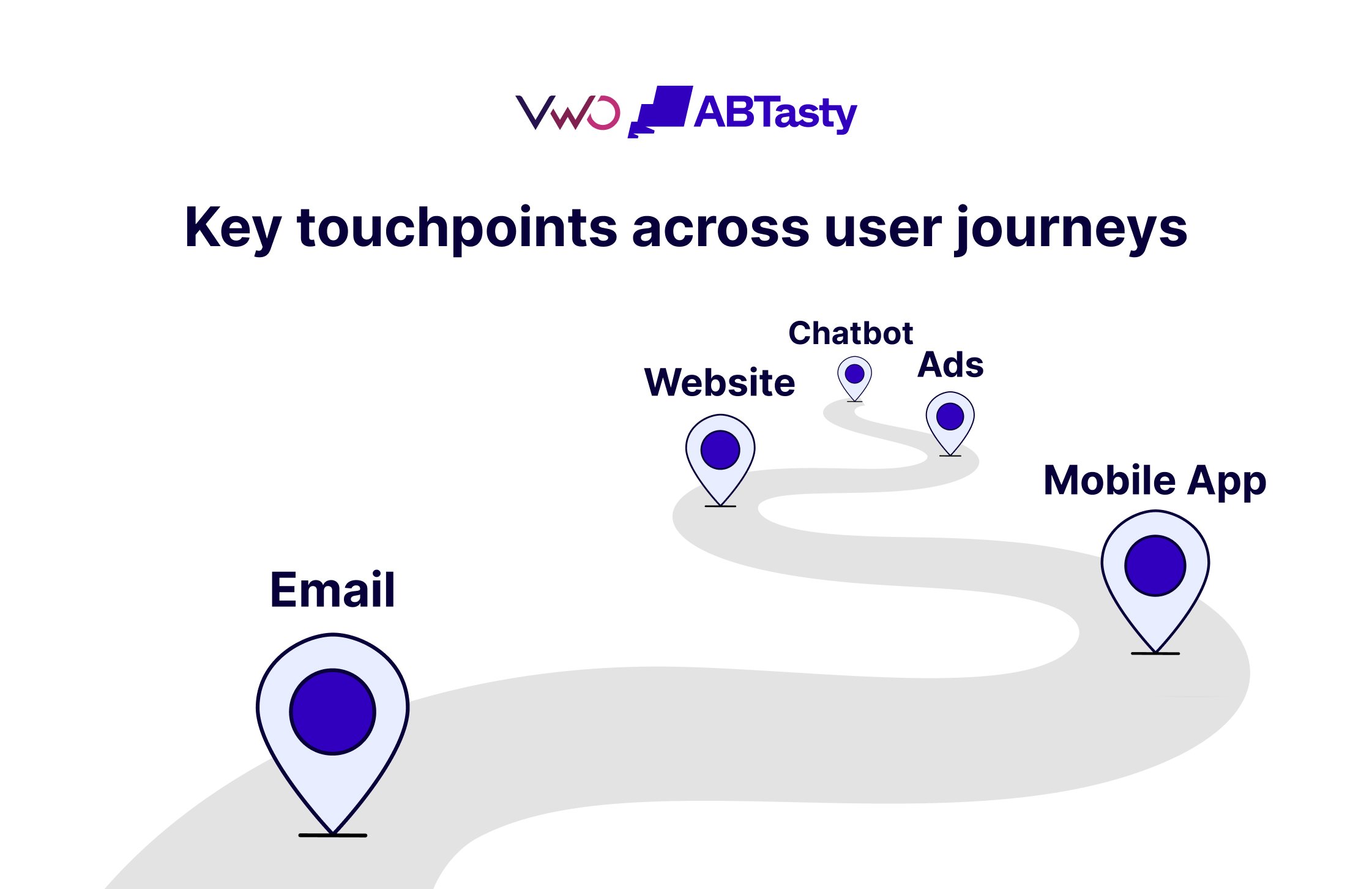
We must prioritize retargeting experiments, behavioral nudges, and lifecycle-based personalization, and AI can augment traditional A/B testing very efficiently here through predictive journey modeling and personalized interventions.
At Pierrine, we tested adding social proof and urgency to our lead magnet landing pages. We moved client testimonials higher up the page and added deadline-based offers. We, however, learned very quickly that this won’t work all the time. We operate in the consulting/knowledge space, and so our best approach was to focus on the quality of the resource we make available.
We also noticed that our homepage was a significant entry point for traffic. Instead of keeping it as a typical corporate information style homepage, we turned it into an insight hub, which started driving more traffic to the actual lead generation landing page.
We found that landing page conversion rates are higher by approximately 20% for user journeys that originate from the homepage.
CRO meets performance marketing
My unique approach to performance marketing does not just focus on quick wins that will always need ads to survive, and I believe very soon, the business question for performance marketing will demand this awareness.
If performance marketing managers want to have a sustainable seat in the room, this pivot in perspective is necessary. This is the approach I lead at Pierrine Consulting in driving our consulting business in Africa, as well as our B2B Product, Yaarnbox.
It is mandatory to enrich targeted advertising, focused Account Based Marketing and Lead generation tactics with UX testing and persona-informed content that not only ensure leads are converted but also reduce the reliance on spend, and ultimately optimizes ROI.
When the performance marketing function was first established at Pierrine, we worked closely with the website and content teams to improve lead generation from consulting service pages.
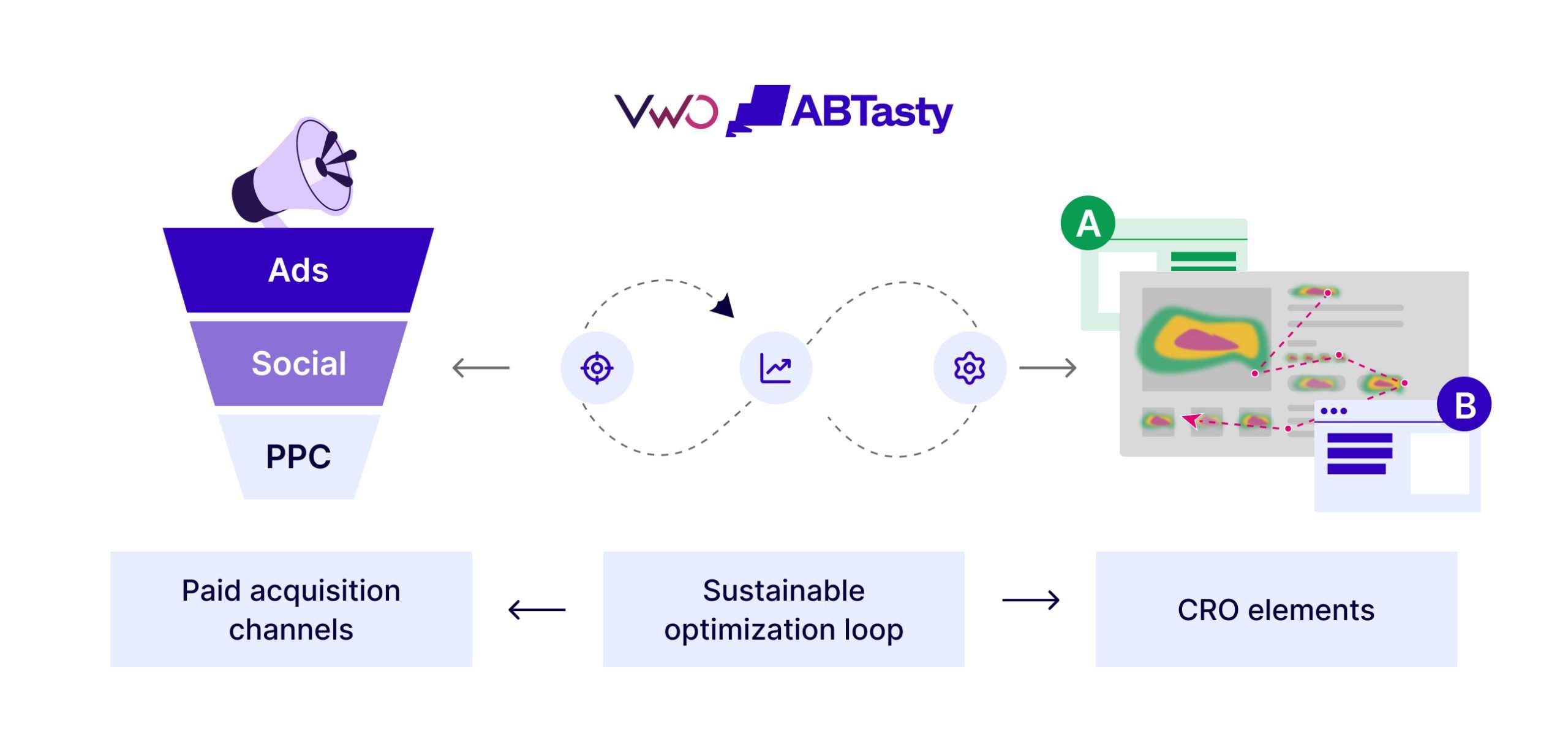
The performance team identified high-intent traffic sources (in terms of channel and location), while the CRO effort focused on simplifying user journeys, strengthening copywriting, and improving call-to-action placement. We tested shorter-length landing pages, testimonial-led landing pages over time, and refined messaging based on visitor behaviour. The result was a noticeable increase in the quality of lead submissions which increased our SQL significantly.
The performance marketing function must have a seat at the business development table—call it Sales Action Review meetings or otherwise. Until there’s accountability for lead quality and the commercial outcomes of those conversations, the optimization cycle will always be incomplete.
Market vs. user research synergy
Market research tells you what is happening; user research tells you why. When they align, experimentation becomes not just reactive, but proactive.
For example, a market trend may show Gen Z’s increasing demand for convenience foods and curated cultural experiences; user research may reveal their guilt around health and the desire to signal success. This dual insight can inform experiments in product positioning, pricing, and even delivery timing. In Africa, where data infrastructure can be sparse, combining both approaches ensures decisions are locally grounded, not globally assumed.
Tech stack barriers to testing
A bloated or disconnected tech stack can paralyze experimentation. I’ve seen teams with best-in-class tools that never shipped a test because integration was a nightmare. Your stack should be lightweight, flexible, and interoperable; and most-importantly, ‘necessary’. Unnecessary stacks; or what I call “tech for the sake of tech” does more harm than good, and honestly, as tech-based as marketing has become, at the core of it, it is about marketing and finding the most efficient paths to building consumer connections.
Testing is more of a mindset, than a concoction of tools. It is important to choose tools that allow low-code testing, plug easily into CRM and analytics systems, and offer fast insights. The right stack is not always the fanciest; it’s the one that lets you move fast and learn faster.

Use asynchronous code to reduce page load delays and improve user experience. Unlike synchronous code, which loads sequentially and can block key elements, VWO’s asynchronous SmartCode loads in parallel with your website. This speeds up rendering and avoids flicker or lag. If the code doesn’t execute in time, the original content is shown—ensuring a smooth experience for all users.
Testing nuances in African markets
Three stand out:
- Trust and skepticism remain major conversion barriers: trust and skepticism, especially for digital transactions. Conversion is less about UX and more about credibility signals (testimonials, WhatsApp chat, cash-on-delivery).
- Many users switch between feature phones and smartphones: Light pages and offline-enabled experiences are crucial.
- Testing tone and language: Local dialects and informal tones often outperform “corporate English.” Testing tone, not just content, is a key differentiator in Africa.
Most importantly, it is important to note that AFRICA is the most heterogenous place on earth, per square mile! Cultural and behavioural nuances are so diverse, you must approach every market with a different set of eyes; with a strong bias for on-the-go insights.

In African markets, experimentation is often viewed as a “luxury” instead of a core strategy. The blockers are lack of infrastructure (analytics, unified data systems), overreliance on intuition or HiPPOs (Highest Paid Person’s Opinion), resource constraints, especially with small teams wearing multiple hats.
I’ve found that when we reframe experiments as risk mitigation tools, not just optimization tactics, adoption increases. Also, we need more Africa-based case studies—proof that testing works in our markets, not just in Silicon Valley.
Experimentation is about learning, often from failure and so the grit to not flinch in the face of seeming failure, and the boldness to not play the ostrich, hiding from unpleasant results, are critical skills everyone needs. The best growth professionals treat failures as fuel and have the diplomatic skill to explain “why this didn’t work” to senior stakeholders without losing trust.
AI’s impact on experimentation
AI has changed how fast and how deeply we can lear. From predicting user churn to generating headline variants, AI has become my unpaid intern and co-pilot, especially in content testing, audience segmentation, and even sentiment analysis.
Going forward, AI will turn experimentation into a continuous background process, where multivariate tests run passively, and real-time personalization happens at scale.
I use AI to accelerate insight generation from user feedback, survey responses, and behavioural data. It helps identify recurring themes and potential friction points much faster than manual analysis. Our reporting and insight generation has been much more detailed and impactful as a result of this.
Ultimately, I lean into the processing and analytical capabilities of AI, and not the creative. I ensure that all our outputs are thoroughly human; however, the backend work of analysis and understanding the insight behind the numbers, AI does that well.
Learning from career
One realization I’ve had throughout my career is that depth beats width.
Vanity metrics look good on dashboards, but when the rubber hits the road, the real numbers that get the job done aren’t the most flamboyant acronyms or buzzwords. A campaign that speaks deeply to 1,000 of the right people will sometimes beat a viral one seen by 100,000 passersby, especially when you care about not just what happens in 10 weeks, but also 10 years down the line.
In Africa, especially, where data is costly and attention is fragmented, precision and empathy matter more than virality. It’s a lesson that’s reshaped how I build teams, products, and go-to-market strategies.
Wrapping it up
Mayowa brings clarity to what experimentation looks like when resources are limited, tech stacks are messy, and teams are expected to do more with less. His approach is practical, honest, and rooted in the realities many marketers face today.
Hope you found a few insights worth carrying into your own work.
If you’re exploring ways to simplify testing or make better use of your data, VWO might be worth a closer look. Request a demo today.
Categories: