
 DE
DE
 BR
BR




 ChatGPT
 Perplexity
 Gemini
 Claude
 Grok
Grok
How to Run a Content Survey to Improve Your Website
38% of people leave a website simply because the content or layout doesn’t feel right to them.
Not incorrect.
Not broken.
Just… off.
Your content didn’t match their mental model.
Content surveys give you something analytics never will: a chance to hear why people hesitate before they become part of that “38%”. They bridge the gap between what you publish and what readers actually need, making them a powerful tool in modern content marketing.
Here, we’ll break down how to run content surveys that reveal these signals and help you improve your website content with clarity and confidence.
What is a content survey?
A content survey helps you gather immediate, reader-level feedback from anyone who views your content.
It’s a short questionnaire that helps you understand how people perceive and interact with your website content. It captures direct feedback on relevance, clarity, usefulness, and overall experience, straight from the reader, in their own words, providing valuable information.
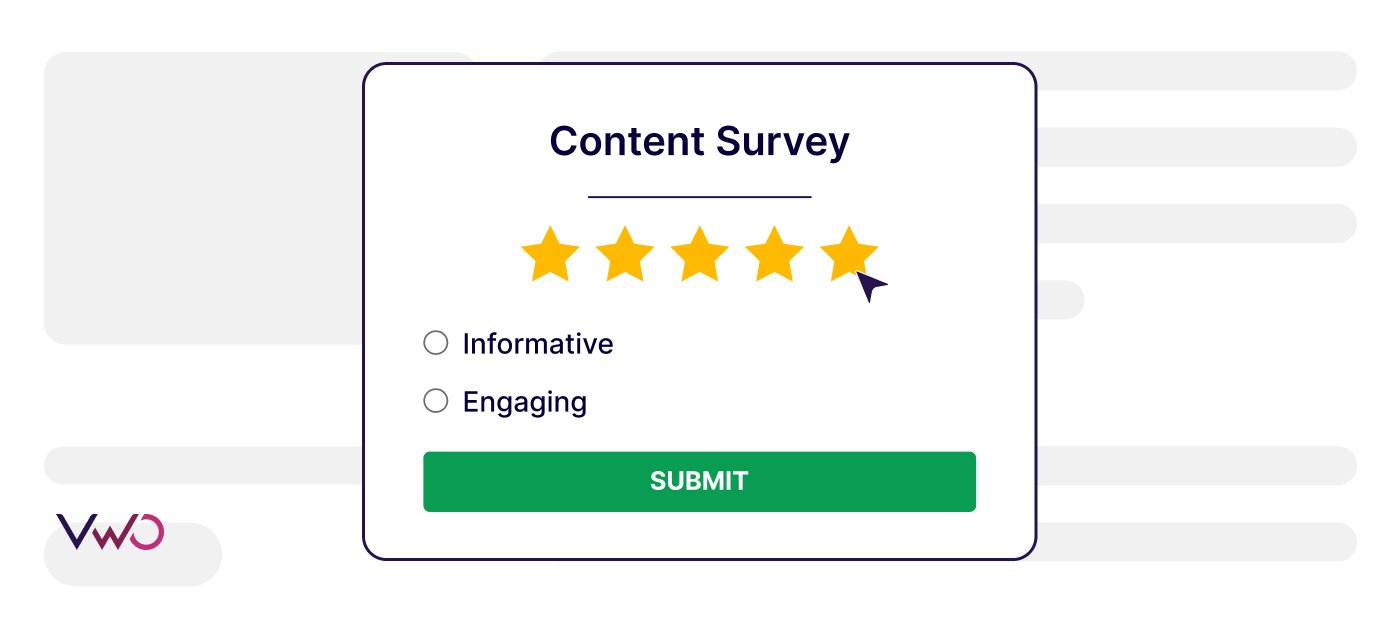
You can trigger these online surveys at moments when website visitors are most engaged, like at the end of a blog post, midway through a landing page, or after scrolling through a long-form resource.
For instance, you’re running a SaaS business and publish a detailed guide on “How to Choose the Right Plan.”
A content survey at the end of the article might reveal that readers found the information helpful, but still weren’t sure which plan fit their needs. That single insight could help you add comparison tables, examples, or a simple decision flow, instantly improving clarity and boosting conversions.
Here’s a short webinar that walks you through how surveys help uncover real user motivations and content gaps.
Benefits of conducting a content survey
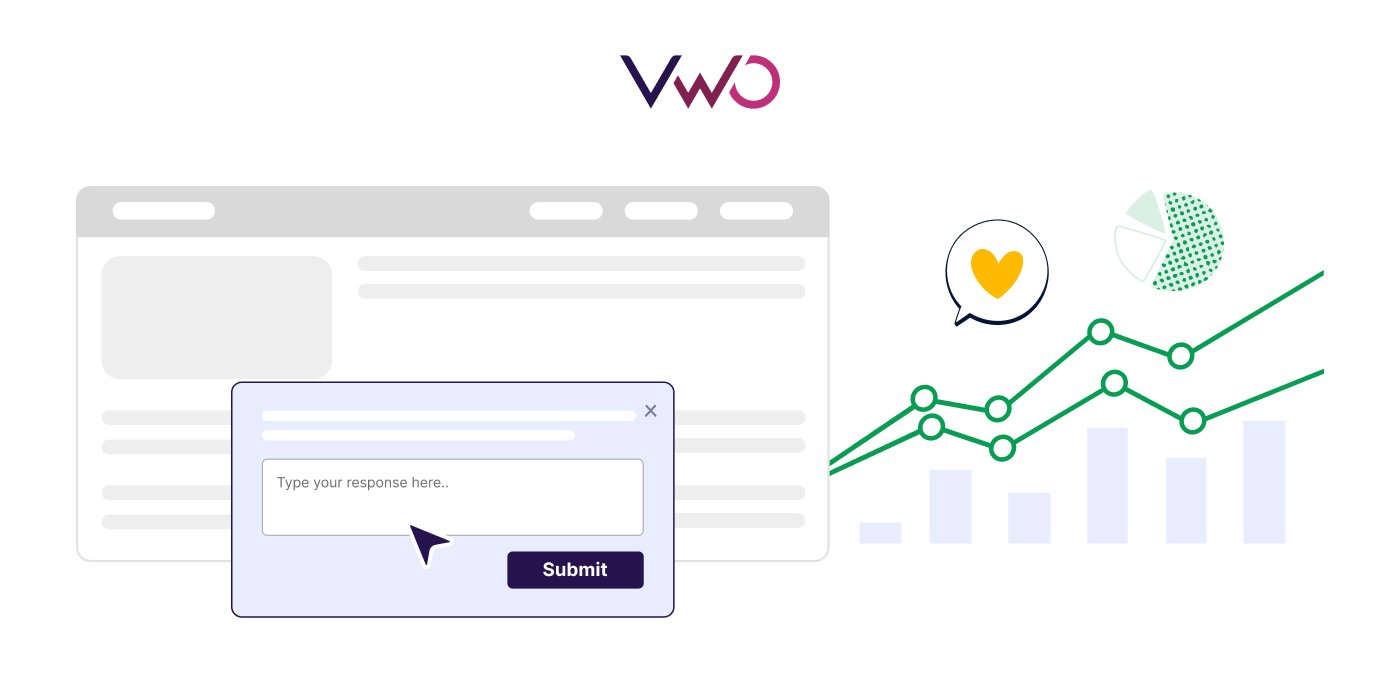
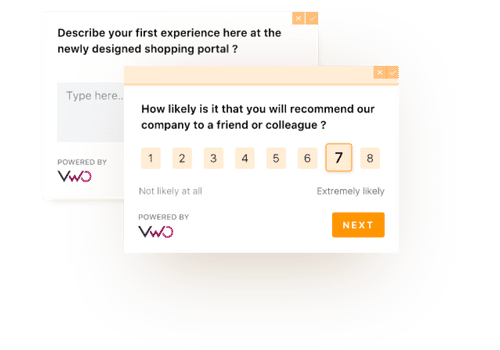
As seen in the above example, a content survey shows you what your audience is actually thinking by capturing customer feedback at the moment they’re consuming your content. And when you consistently gather such insights, several benefits follow:
You understand what your audience really needs
Surveys uncover the “why” behind user behavior, helping you understand whether your content is actually serving your target audience and broader target market.
You make your content clearer and more useful
Users can point out confusing sections, missing examples, areas where the content doesn’t fully answer questions they came with, or topics that need more depth. This feedback guides you in shaping your content to better match what readers are looking for and the questions they’re trying to solve.
Better audience targeting
Survey responses help refine your segments so you can tailor content for each target audience more accurately and directly address their pain points.
Engagement improves naturally
When content aligns with user expectations, people stay longer, read deeper, and explore more pages. Better engagement also signals quality to search engines.
You prioritize formats and identify content gaps
Surveys tell you which formats users prefer: whether that’s videos, step-by-step guides, templates, or shorter summaries. They also reveal what users expected but didn’t find, such as FAQs, comparisons, pricing clarity, or real-world examples.
Conversions improve because friction reduces
Clearer, better-structured content removes hesitation. When users clearly communicate their needs, you can tailor the content to meet their requirements, thereby enhancing both customer satisfaction and conversions.
Your content strategy becomes data-backed
Feedback removes guesswork. Instead of debating ideas internally, your marketing team can prioritize topics and improvements based on what readers truly care about.
You build a continuous improvement loop
When paired with behavioral insights and testing tools like VWO, content surveys fuel an ongoing cycle: learn → update → test → optimize, resulting in steadily improving content performance.
Encyclopedia Britannica Group used VWO On-Page Surveys to identify the top questions users had while reading its articles. Based on these insights, the team introduced an accordion-style Q&A section tailored to each topic, making answers easily accessible. The result: more than 23% of users actively engaged with the new feature, significantly boosting content interaction and user satisfaction. Read the full story here.
Key elements of effective content surveys
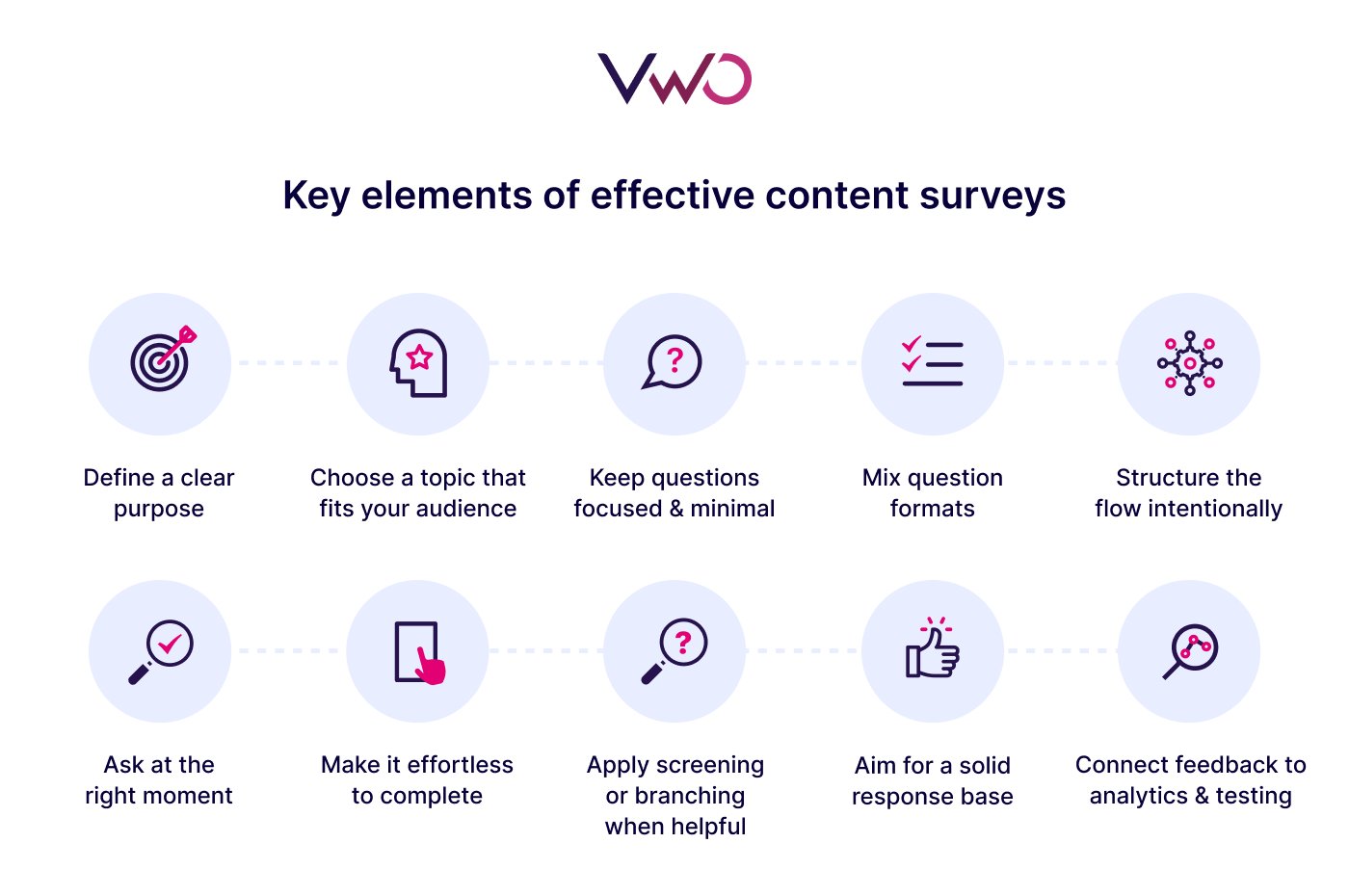
The quality of a content survey depends on how well it captures context. A few simple design choices determine whether you get vague opinions or sharp, actionable insights. Here are the elements that make a content survey truly effective.
- Define a clear purpose: As with any market research, know the exact insight you’re trying to uncover, whether it’s clarity issues, missing information, or content preferences.
- Choose a topic that fits your audience: Keep surveys aligned with what your target audience actually cares about, such as asking product-page visitors about clarity rather than general content interests.
- Keep questions focused and minimal: Limit the survey to a handful of sharp, well-structured questions that go beyond surface-level opinions. Well-designed survey templates ensure you’re not overwhelming readers with unnecessary questions.
- Mix question formats: Combine various formats such as multiple choice for quick signals, Likert scale ratings for quality checks, and open-ended questions to capture deeper feedback.
- Structure the flow intentionally: Start with broad questions (“Was this content helpful?”) and move toward specifics (“Which section felt unclear?”) to keep respondents focused and encourage more considered answers.
- Ask at the right moment: Trigger the survey only after the user has engaged enough to give meaningful feedback, typically post-scroll, post-read, or on exit.
- Make it effortless to complete: A clean layout, multi-device-friendly design, and quick completion path lead to higher-quality responses.
- Apply screening or branching when helpful: Use screening questions or skip logic to show the right questions to the right respondents and reduce data noise.
- Aim for a solid response base: When decisions or reports depend on the results, ensure you gather a sufficient number of responses.
- Connect feedback to analytics and testing: Use tools like VWO Surveys, Insights, and Testing to analyze surveys alongside behavioral analysis and validate content improvements.
How to conduct a content survey effectively
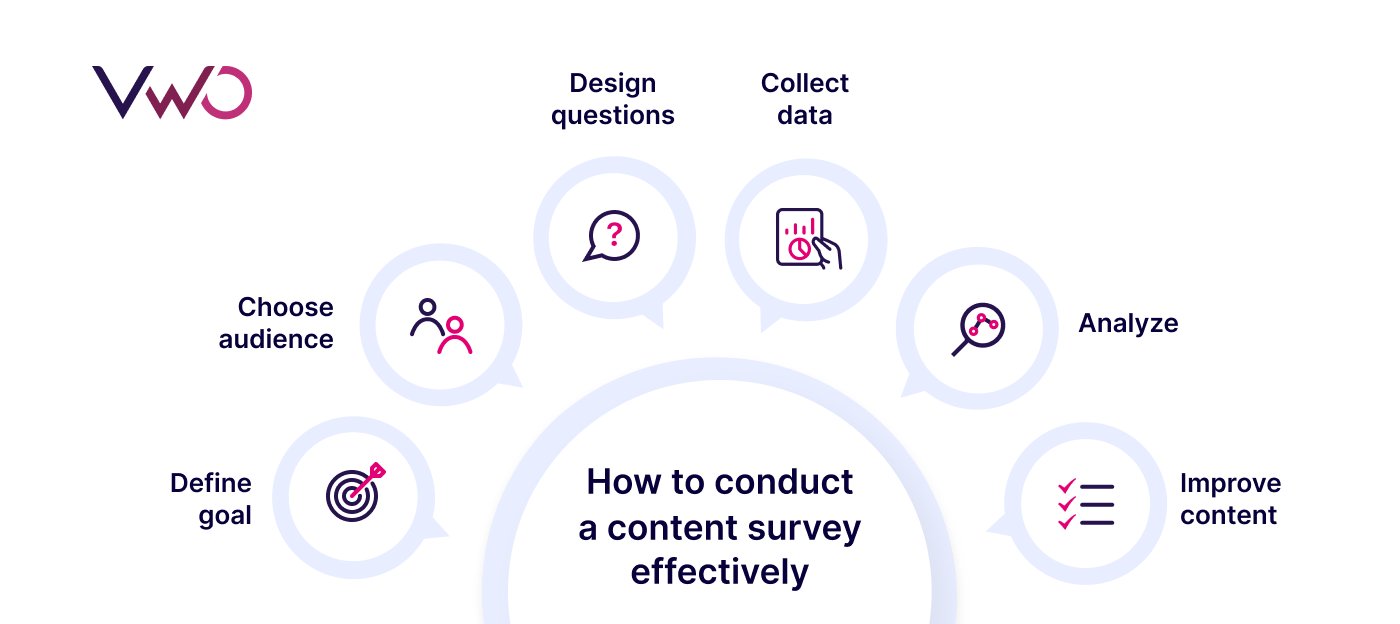
Running a content survey is simple, but executing it effectively requires structure and intention. Here’s a practical, step-by-step approach to ensure you gather valuable insights that genuinely improve your content.
Start with a clear goal
Decide what you want the survey to uncover: clarity issues, missing information, format preferences, topic relevance, or decision-making friction. A tight, content-specific goal keeps the survey relevant.
Identify who you want feedback from
Different content attracts different audiences, and each group brings a unique context. Choose the group whose feedback will matter most for that content type:
- Blog readers who come for explanations
- Visitors comparing plans or features
- Users exploring your resource hub or products
- Readers who reached the end of a guide
Select a tool that supports content-level insights
Pick an online survey tool that allows you the flexibility to run unlimited surveys, target specific pages, trigger surveys based on scroll depth, and connect qualitative feedback with analytics.
VWO Surveys within VWO Insights are ideal because they allow you to move seamlessly from feedback analysis to behavioral analysis, thanks to integrated tools like heatmaps and session recordings that show you exactly what users did before sharing their input.
Create your survey with a focused question set
Draft a small, purposeful set of questions that directly evaluate your content.
Context-driven questions produce far richer insights, for example, asking comparison-page visitors what’s missing, blog readers whether they need more examples, or product-page users how confident they feel in taking the next step.
VWO Surveys can significantly streamline this step. With VWO Copilot, you can instantly generate goal-specific, context-aware questions based on what you’re trying to learn.
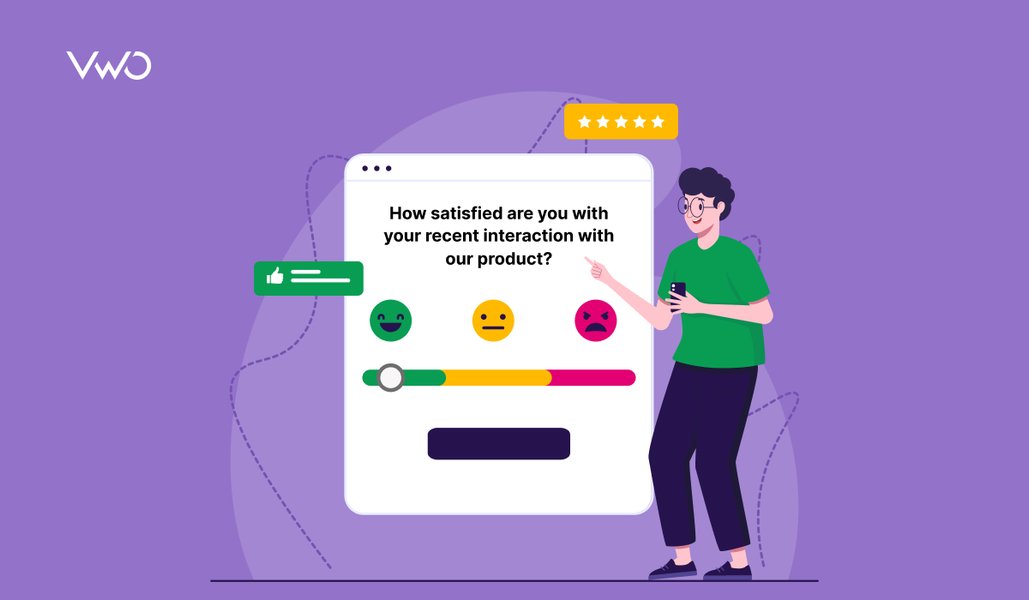
Further, you can choose from multiple formats: ratings, checkboxes, open text, NPS, and more, to capture both qualitative and quantitative feedback.
And with conditional follow-ups, deeper questions appear only when users report confusion or friction, helping you collect meaningful context without overwhelming respondents.
You can also use pre-built survey templates that you can customize with branding, language, and targeting rules.
Trigger the survey at the right moment in the content journey
Show the survey only after the user has truly engaged with the content; different moments in the customer journey require different triggers for accurate, experience-based feedback.
For a long guide, that might be once they’ve scrolled most of the way; for an article, at the final section; for a comparison page, after they’ve spent time evaluating options; and for resource pages, when they move to exit. Proper timing leads to more accurate, experience-based feedback.
If you’re using VWO Surveys, you can use smart triggers, like scroll depth, time on page, or exit intent, to show the survey at the exact moment readers are ready to respond. You can also use segmentation to tailor questions for different user groups (new vs. returning visitors, blog readers vs. product-page users), ensuring every response is more relevant and insight-rich.
Before launching, do a quick device and placement check to ensure the survey appears smoothly and doesn’t disrupt the reading experience for survey participants.
Analyze responses to identify what readers struggled with
Group insights into content-specific themes to quickly spot patterns across articles, landing pages, and product pages. Categorizing survey data this way makes it easier to see what needs immediate attention:
- Clarity
- Missing information
- Format preferences
- Trust/credibility concerns
- Topic suggestions
VWO Copilot can automatically summarize responses, highlight key insights, identify recurring themes, and surface actionable opportunities, helping you move from raw feedback to clear improvements with far less manual effort.
For more on how AI is redefining survey analysis and feedback interpretation, here’s a deeper look at generative AI–based surveys.
Act on insights and validate improvements
Update your content based on key findings; add examples, simplify sections, introduce visuals, or restructure pages for clarity.
Then, validate changes using VWO Testing or monitor engagement using VWO Insights to ensure the updates create measurable improvement.

Use VWO’s advanced survey filters to drill down into responses from different types of website users, like first-time visitors, returning readers, or people who viewed a specific page. This helps you isolate patterns, uncover hidden friction points, and act on insights that truly matter.
By combining feedback, behavior analysis, and testing in one place, VWO helps you close the loop quickly and turn user feedback into meaningful, validated content improvements. Request a demo to experience VWO Surveys in action.
Understand the psychology of the visitor. Respect the person coming to your website. When you express that with the right emotion, you can do a crazy job with copy. I still get rejected when I suggest copy tests — I have to ask to run more copy tests.
– Joanna Wiebe, founder of Copyhackers.com (Source)
What are common content survey questions?
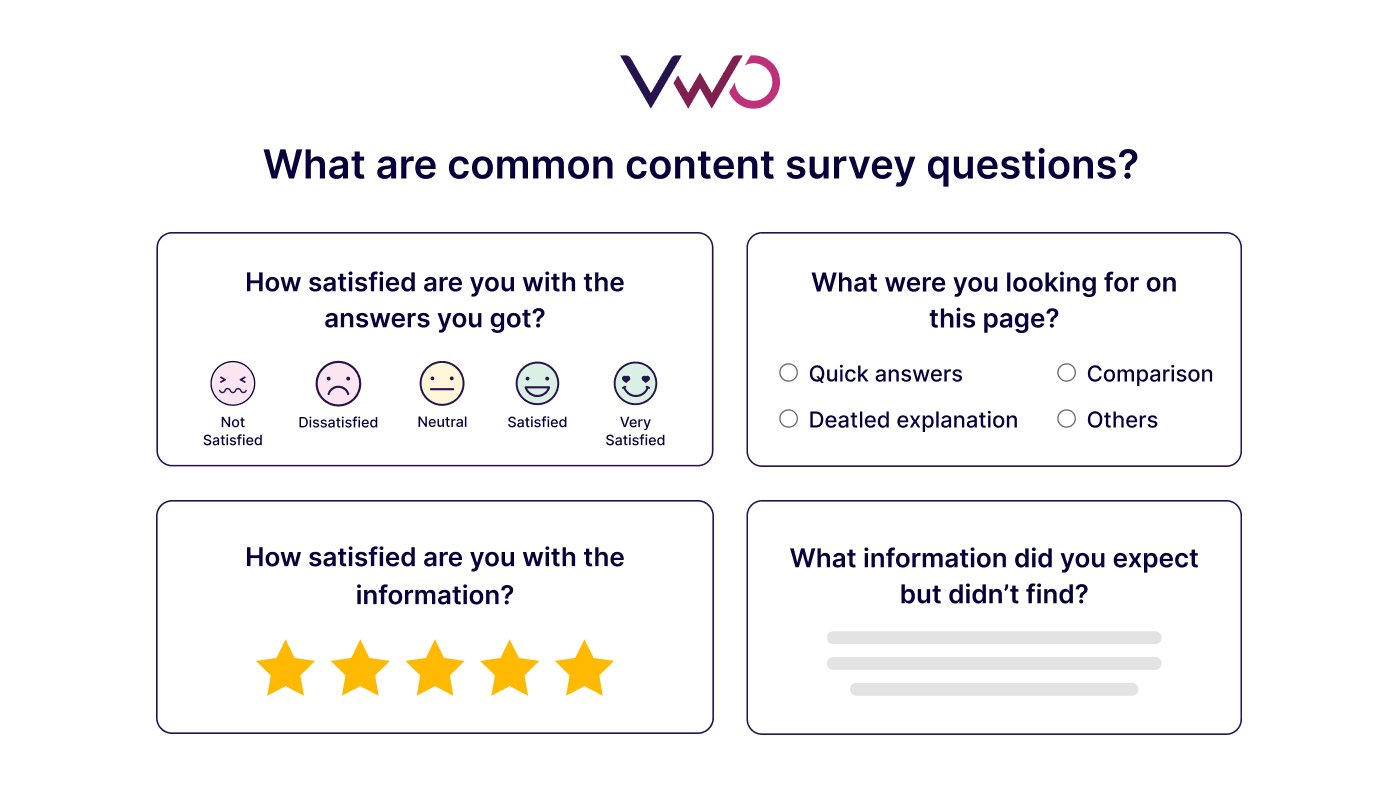
A good content survey blends rating-scale questions, yes/no items, multiple answer choices, and open-ended responses. This mix helps you measure clarity, usefulness, trust, and overall satisfaction, while uncovering what users still need.
Below are the most common and useful content survey questions:
Questions about user intent and purpose
These help you validate whether the content aligns with the user’s search intent.
- What brought you to this page today?
- What were you trying to learn or accomplish?
- Did this content match what you expected to find?
Questions that assess clarity
These help you understand how easily users understood the content.
- How clear was the information on this page?
- Was any part of the content confusing or hard to follow?
- Which section needs more explanation or simplification?
Questions that reveal missing information
Useful for uncovering gaps between user expectations and what the content delivers.
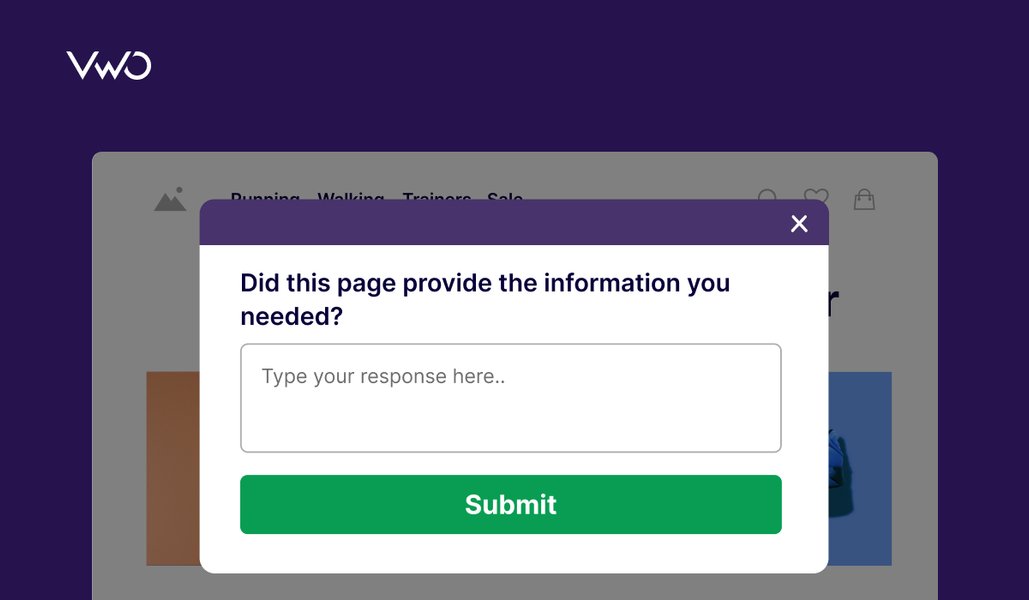
- Did this page answer your question?
- What information were you hoping to find here?
- What’s missing that would make this page more complete?
Questions that evaluate usefulness and task completion
These indicate whether the content supported the user’s goal.
- How helpful was this content for what you needed today?
- Did this page help you move forward in your decision or research?
- How satisfied are you with the level of detail provided?
Questions that capture format and depth preferences
Ideal for shaping future versions of the content.
- Would you prefer this topic in another format (video, infographic, comparison table, or a shorter summary)?
- Would you prefer a more concise or more detailed version?
- What type of content do you find easiest to understand for topics like this?
Questions that assess trust and credibility
These uncover whether the tone, evidence, and presentation build confidence.
- Did this content feel trustworthy and accurate?
- What would increase your confidence in the information provided?
- Was anything unclear or unsupported?
Questions that surface improvement opportunities
These closed-ended questions capture qualitative feedback that directly informs updates.
- What’s one thing we should improve on this page?
- What would make this content more helpful for you?
- Is there anything else you’d like us to add on this topic?
Questions that reveal next steps and user behavior
Designed to understand how content influences action.
- What did you do after reading this page?
- Did this content help you decide what to do next?
- What were you expecting to do after reading this content?
Questions that measure future intent and likelihood to return
Net Promoter Score-type questions help you understand whether the content builds trust, loyalty, and ongoing engagement.
- How likely are you to return to our site for more information on this topic?
- Would you come back to explore similar content?
- How likely are you to recommend this page to someone who needs this information?
- Would you trust our future content on this subject?
- Did this content encourage you to read more on our website?
FAQs
Content feedback reveals whether your content meets user expectations. While analytics show what users do, feedback explains “why”, helping you create content that is more useful, trustworthy, and aligned with real user needs.
Use survey insights to identify what confused readers, what they couldn’t find, and what format they prefer. Then update your content by clarifying sections, adding missing details, improving structure, or using better visuals and examples.
Categories:






![What Is Net Promoter Score (NPS)? How to Measure and Use It [Complete Guide]](https://static.wingify.com/gcp/uploads/sites/3/2025/11/Feature-image-What-Is-Net-Promoter-Score-NPS_-How-to-Measure-and-Use-It-Complete-Guide-1.jpg?tr=h-600)