 DE
DE
 BR
BR




 ChatGPT
 Perplexity
 Gemini
 Claude
 Grok
Grok
Content Personalization: How to Deliver Tailored Experiences that Convert
The most successful digital brands have moved beyond the “one-size-fits-all” broadcast. They view their website as a dynamic experience that evolves for every visitor, ensuring every digital touchpoint reflects the user’s unique intent.
Implementing even basic website content personalization can drive a 14% increase in sales. By designing for relevance, you turn anonymous visits into meaningful interactions that drive long-term loyalty.
In this guide, we’ll explore the content personalization strategies and tools you need to design experiences that don’t just reach an audience, they resonate with them.
What is content personalization?
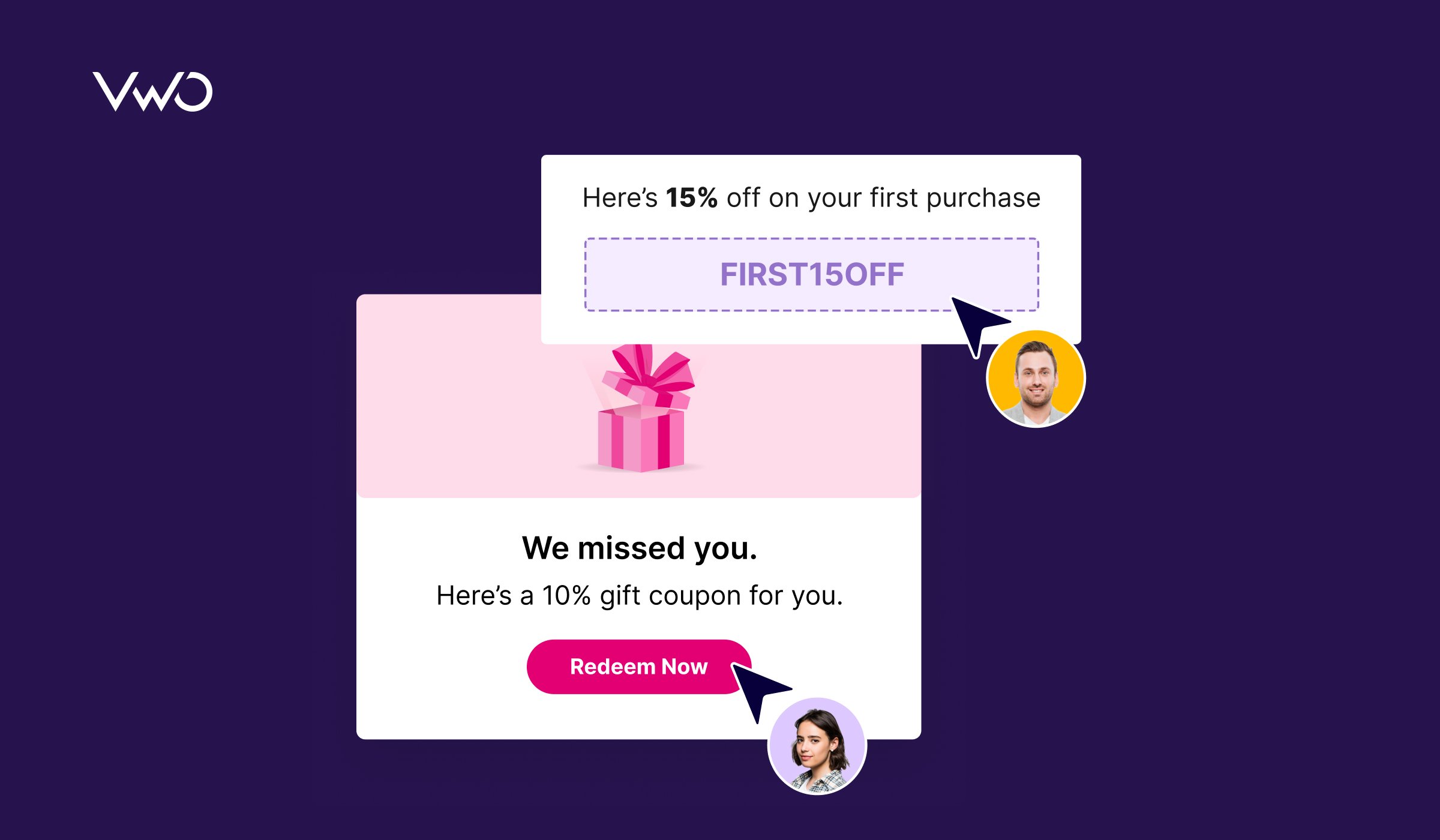
Content personalization is a digital marketing strategy of delivering tailored content experiences to individual users based on data such as behavior, preferences, location, device, or stage in the buyer journey, ensuring each visitor sees the most relevant message at the right moment.
Benefits of content personalization
Moving beyond generic experiences allows teams to optimize relevance at every stage of the customer journey, unlocking measurable performance gains.
1. Higher conversion rates
When offers and CTAs align with a visitor’s stage in the buyer journey, decision friction drops. For example, a personalized Call-to-Action (CTA) can perform up to 202% better than a default one.
2. Lower bounce rates and longer sessions
Showing content that reflects a user’s context, such as industry, location, or past behavior, encourages deeper exploration. Mobile website content personalization, for example, can create location-aware or device-specific experiences that keep users engaged.
3. Stronger customer loyalty over time
Personalization signals relevance and respect for the user’s time. Remembering preferences and prior interactions helps build trust, which is critical for repeat engagement and retention.
4. More informed, data-driven decisions
Implementing a content personalization strategy forces teams to engage more deeply with behavioral data. This often reveals hidden friction points, high-intent segments, or underperforming content that would otherwise go unnoticed.
5. More effective B2B lead nurturing
In B2B content personalization, where buying cycles are longer, relevance compounds. Tailoring content recommendations by role, industry, or company size helps maintain momentum throughout the research and evaluation phase.
6. Improved ROI across acquisition channels
Personalized landing pages that reflect ad-level messaging from paid campaigns and social media platforms create a stronger message match. This alignment enhances customer engagement, boosts conversion efficiency, and reduces the cost per acquisition.
From a CRO perspective, content personalization isn’t about adding complexity; it’s about removing uncertainty and reducing decision friction. When users see experiences that clearly reflect their needs, conversions become a natural outcome.
One Click Ventures increased conversions by 30% by personalizing on-site messaging and checkout experiences based on visitor geography and behavior, demonstrating how relevance at key moments directly drives conversion outcomes.
Types of content personalization
To build an effective content personalization strategy, the first step is choosing the lens through which you view your target audience. Most personalization efforts fall into four primary categories, each suited to different data maturity levels and business goals.
1. Product and content recommendations
Common in eCommerce content personalization, this method uses behavioral patterns to suggest relevant products or content based on browsing or purchase history.
Example: Amazon displays “Inspired by your browsing history,” while Netflix promotes “Top Picks for You” to guide discovery.
2. Personalized CTAs (smart CTAs)
Calls to action change based on a visitor’s familiarity and intent, helping guide users to the most relevant next step.
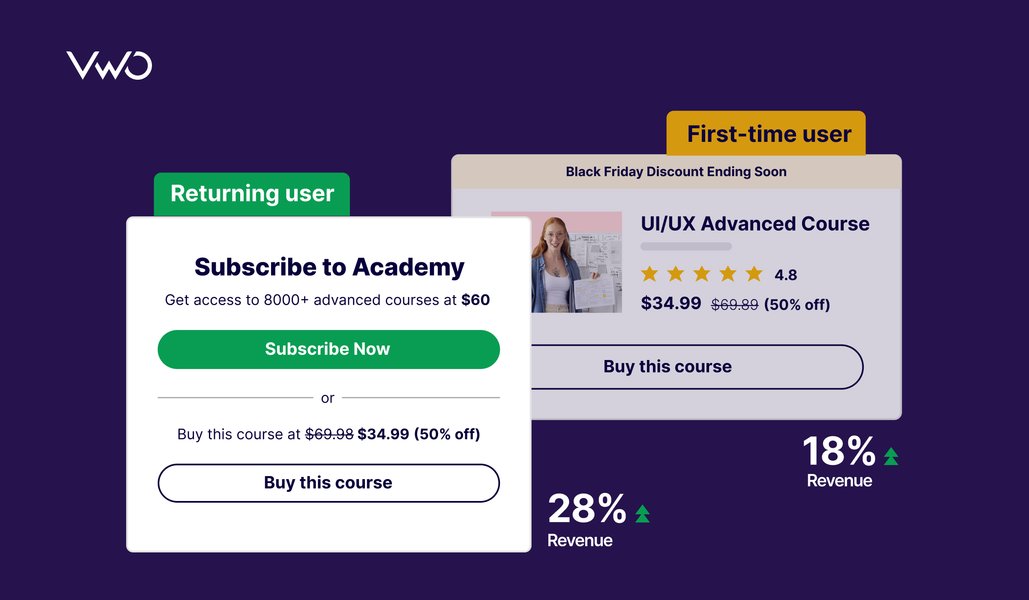
Example: A first-time visitor sees “Download our Free Guide,” while a repeat visitor who has already downloaded the guide is prompted to “Book a demo.”
3. Message and headline personalization
Message and headline personalization adapts on-page copy to reflect a visitor’s intent, familiarity, or stage in the journey. Instead of showing the same value proposition to every user, messaging shifts to emphasize what matters most in that moment: education, reassurance, or progress.
Example: A first-time visitor sees an educational headline explaining the product’s core value and use case. A returning visitor sees a headline that surfaces the most important next piece of information for their journey, such as a key feature they explored earlier, proof that addresses a common hesitation, or a prompt to complete an unfinished step, helping them move forward.
4. Layout and module personalization
Layout and module personalization changes which sections appear on a page, and in what order, based on user context. Rather than rewriting content, this approach prioritizes relevance by surfacing the most important information first.
Example: Enterprise visitors see case studies and trust signals above the fold, while SMB visitors see feature highlights or pricing modules earlier in the page.
5. Navigation and journey personalization
Navigation and journey personalization adapts menus, shortcuts, and paths to reduce rediscovery friction and help users resume progress faster. This type of personalization is especially effective for returning visitors and long consideration cycles.
Example: Returning users see recently viewed categories, saved items, or “pick up where you left off” links directly in the navigation.
6. Experience-level personalization
Experience-level personalization tailors entire pages or journeys for specific audiences or scenarios. Instead of changing individual elements, the full experience, including messaging, visuals, and CTAs, is designed around a defined context.
Example: Campaign landing pages that adapt headlines, proof points, and CTAs based on traffic source, audience type, or intent level.
Each type of personalization serves a different role in the conversion funnel, from early-stage relevance to late-stage decision support. High-performing programs layer these approaches intentionally, rather than relying on a single tactic.
Important elements of content personalization
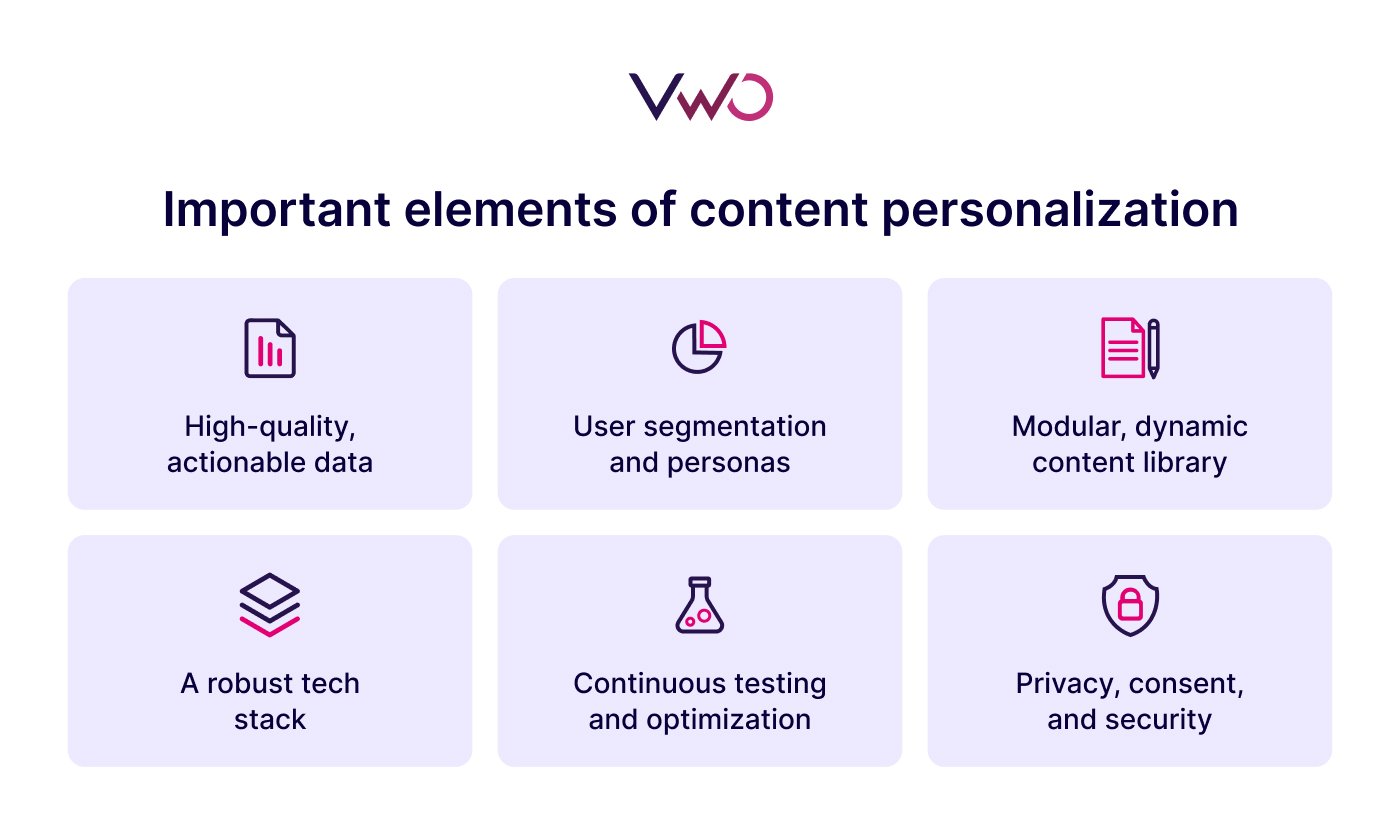
Effective website content personalization requires more than creative ideas. It depends on a structured framework that connects data, content, technology, and optimization. Without these core elements working together, personalization efforts remain surface-level and difficult to scale.
1. High-quality, actionable data
Personalization is only as good as the data powering it. This includes first-party behavioral data (pages viewed, clicks, scroll depth), zero-party data (information users explicitly share through forms or surveys), and firmographic data such as company size or industry for B2B use cases.
2. User segmentation and personas
You cannot personalize for “everyone” at once. You must define clear segments, such as “High-Value Shoppers,” “At-Risk Subscribers,” or “Industry Leads,” to ensure your content personalization hits the mark.
3. Modular, dynamic content library
To deliver different experiences, teams need a flexible content system. Headlines, visuals, CTAs, testimonials, and recommendations should be built as interchangeable components that can be swapped dynamically based on user signals, without redesigning pages every time.
4. A robust tech stack
Personalization works best when tools communicate seamlessly. Your content personalization tools should integrate with analytics, CRM, customer data platforms, and experimentation platforms to connect user behavior directly to content changes.
A platform like VWO, for instance, allows you to connect user behavior directly to content changes without needing a developer for every tweak.
5. Continuous testing and optimization
Personalization is an ongoing process. Every personalized experience should be tested either against a generic control or against alternative personalization variants to measure true incremental lift.
Ongoing A/B testing ensures that content personalization strategies are driven by evidence, not intuition, and continue to improve over time.
6. Privacy, consent, and transparency
Modern personalization strategies must balance relevance with responsibility. Clear consent mechanisms and ethical data usage are critical for maintaining user trust while enabling personalization.
Together, these elements form a system where personalization is measurable, scalable, and conversion-focused, rather than experimental or cosmetic.
How does content personalization work
While content personalization can be implemented in different ways depending on the platform and use case, the basic approaches typically follow a similar execution flow.
Step 1: Identify audiences using behavioral data
Personalization starts by understanding who your visitors are and how they behave. Using behavioral, contextual, or campaign-level signals, such as location, device type, traffic source, or pages viewed, teams define audience segments that represent different intents or stages in the journey.
Step 2: Define personalization rules and triggers
Once segments are in place, rules determine when and where personalization should appear. These rules can be tied to page visits, scroll depth, clicks, or other in-session actions.
For example, a visitor from a seasonal campaign might trigger a specific banner or offer on the homepage, while a returning visitor may see a different message highlighting continuity or next steps.
Step 3: Deliver dynamic content experiences
With segments and rules defined, personalized content is delivered by swapping specific page elements, such as headlines, CTAs, images, or offer blocks, without creating new pages.
Pro tip: Use the VWO Visual Editor and its ready-to-use widgets (banners, messages, overlays, pop-ups) to swap or add on-page elements for specific segments. You can design and update personalized experiences in a few clicks, without relying on developer support.
Step 4: Test personalized experiences against a control
Personalization isn’t assumed to work; it’s validated. Each personalized experience is tested against a non-personalized control using A/B or multivariate testing to measure true incremental lift.
This experimentation layer ensures that personalization decisions are driven by performance data rather than intuition.
Step 5: Measure results and scale what performs
Results are analyzed by segment to understand what works for different audiences. Personalization tactics that consistently improve engagement or conversions are then expanded across additional pages, campaigns, or journeys.
The below video gives an inside view of how Personalization works in VWO.
Personalization in practice
Orascom Hotels Management used content personalization to re-engage returning visitors with property-specific messaging and time-bound summer offers. By replacing generic homepage content with personalized banners tailored to prior search behavior, the brand achieved a 60.75% uplift in booking conversions and generated $352,377 in revenue from a single campaign, with personalized bookings contributing 42% of total revenue.
Content personalization methods
To move from broad segments to true 1:1 experiences, marketers rely on a set of practical execution methods. These approaches define how personalization is applied on websites and across journeys today.
1. Segmentation-based personalization
This is often the starting point for most teams. Users are grouped into broad categories based on shared attributes, and content is tailored at the group level rather than individually.
Example:
Showing different homepage banners for “first-time visitors” vs. “returning customers,” or displaying industry-specific case studies for B2B content personalization.
This approach is simple to implement and delivers quick relevance gains, especially early in a CRO program.
2. Behavioral personalization
Behavioral personalization adapts content based on what a user does on your site in real-time or over several sessions, such as pages viewed, features explored, time spent, or actions taken. It is particularly effective for eCommerce content personalization.
Example:
Recommending products based on recently viewed items, or triggering a discount pop-up when a user shows exit intent on a pricing or checkout page.
Because it responds directly to user actions, this method helps reduce friction at high-intent moments.
3. Geotargeting and localization
This method tailors experiences using real-time contextual signals such as location, language, device, and time zone, without relying on user identity or historical data.
It adapts currency, shipping details, delivery timelines, offers, visuals, and product emphasis to match regional expectations.
Example:
A clothing retailer may promote winter jackets to visitors in London while highlighting swimwear for users in Sydney.
Because it relies on contextual signals, this approach is well-suited for privacy-conscious personalization and for creating immediate relevance during first-time visits.
4. Predictive (AI-driven) personalization
The most advanced form, AI content personalization, uses machine learning to predict which content, products, or messages are most likely to engage or convert each user.
Instead of relying solely on predefined rules, the system continuously optimizes experiences based on patterns across large datasets, making it easier to personalize at scale without manual segmentation.
Example:
Amazon’s “Customers who bought this also bought” recommendations. These experiences rely on dynamic content personalization that continuously evolves as the system learns from user behavior.
Predictive personalization enables scale, but works best when paired with experimentation to validate impact.
Check out our guide on AI-driven personalization techniques that help deliver smarter, higher-converting experiences.
5. Account-based personalization for B2B
In B2B content personalization, entire site experiences can be tailored for high-value target accounts using firmographic or IP-based signals.
Example:
When a visitor from a target enterprise account lands on the site, the headline adapts to highlight solutions relevant to enterprise-scale teams.
Each of these methods serves a distinct purpose. The real conversion impact comes from combining these methods strategically, using simple rule-based personalization to remove friction early, and algorithmic personalization to scale performance once patterns are proven.
Real-world examples of content personalization
1. Dynamic landing page personalization
Netflix tailors its landing page by adjusting pricing, content highlights, and calls to action based on user location and intent. New visitors are guided with simple sign-up prompts, while returning users see nudges to continue watching.

Why it converts:
By reducing choice overload and aligning messaging to user readiness, Netflix shortens the path from interest to activation.
2. Personalized product recommendations
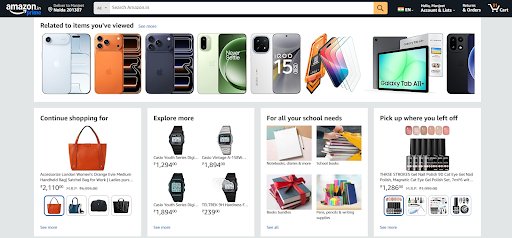
Amazon personalizes product recommendations using browsing history, showing related items and “pick up where you left off” modules that help users resume shopping with minimal effort.
Why it converts:
This removes rediscovery friction and keeps users in an active buying mindset, increasing the likelihood of completion.
3. Behavior-driven learning paths
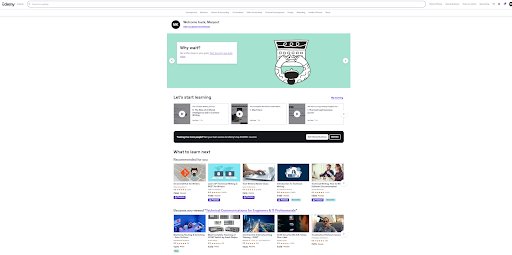
Udemy personalizes its learning experience by adapting course recommendations based on a user’s browsing history, completed courses, and stated interests. Sections like “What to learn next” and “Because you viewed…” dynamically guide learners toward relevant skills, helping them continue progress without searching from scratch.
Why it converts:
By eliminating search effort, Udemy sustains momentum and reinforces progress, key drivers of long-term engagement and retention.
4. Dynamic content display
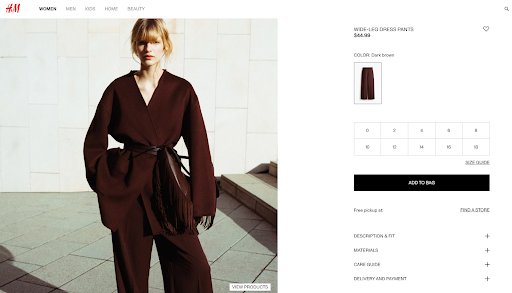
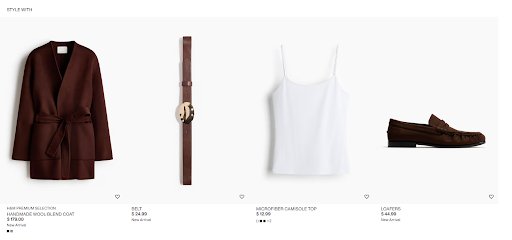
H&M updates on-page content dynamically as users interact with products. Modules like “Styled With” and “Similar Items” refresh in real time.
Why it converts:
Session-based relevance keeps users exploring within the same page, increasing product exposure without disrupting intent.
5. Interactive product finders
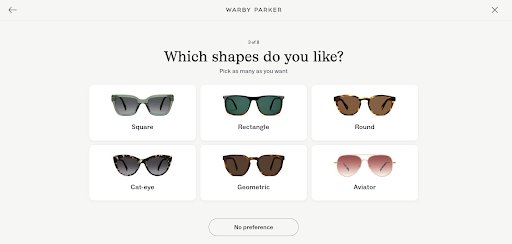
Warby Parker uses an interactive “Find Your Fit” quiz to personalize frame recommendations based on face shape, style preferences, and usage needs.
Why it converts:
Guided decision-making reduces uncertainty early, helping shoppers reach confident choices faster for high-consideration purchases.
Best tools for content personalization
Dynamic Yield
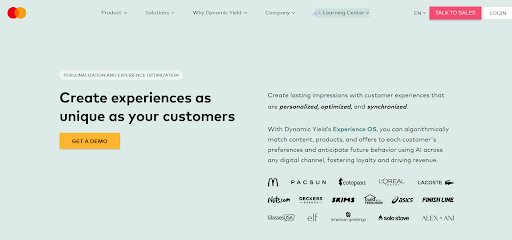
Dynamic Yield helps businesses create personalized customer experiences across multiple digital touchpoints. Its Experience OS serves as a centralized hub to collect, analyze, and activate customer data.
Teams can build audience segments, deliver product recommendations, and run A/B tests from a single platform. Geo-based targeting and AI-driven insights help tailor experiences in real time. Performance dashboards make it easier to measure and optimize personalization at scale.
Optimonk
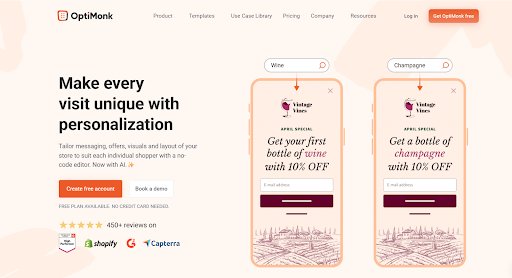
OptiMonk helps marketers drive conversions through website personalization, targeted pop-ups, and experimentation. Its no-code editor and AI-powered targeting enable dynamic landing pages and messages that adapt to visitor intent in real time, improving relevance, conversions, and return on ad spend with built-in analytics and A/B testing.
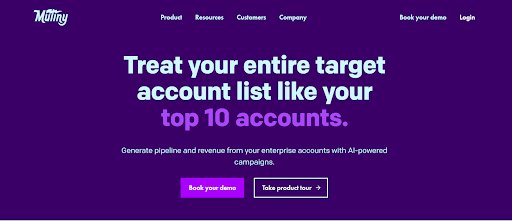
Mutiny
Mutiny is a no-code personalization platform built for B2B teams. It uses account and intent signals to deliver 1:1 website experiences—such as tailored landing pages, messaging, and social proof, for target accounts, helping marketers increase relevance and accelerate pipeline without developer support.
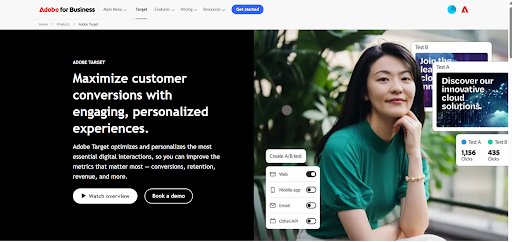
Adobe Target
Adobe Target enables businesses to deliver personalized web and mobile experiences using audience segmentation, rules-based targeting, and AI-driven recommendations. By combining personalization with A/B and multivariate testing, teams can serve relevant content in real time and optimize experiences to improve engagement and conversions.
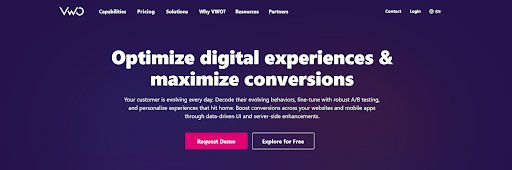
VWO
Effective content personalization requires more than dynamic content; it needs a system that connects user behavior, personalization, and experimentation. VWO brings these elements together, helping teams deliver personalized experiences that are both relevant and measurable, without heavy dependence on development resources.
Behavior-driven insights
VWO Insights helps teams understand how visitors interact with content through heatmaps, scroll maps, and session recordings. These behavioral insights reveal where users engage, hesitate, or drop off, guiding smarter personalization decisions.
Flexible audience segmentation with unified data
Using behavioral, contextual, and campaign-level data, VWO enables precise audience segmentation. With Data360, teams can unify data from websites, apps, and external sources to create richer visitor profiles and enable more accurate personalization.
Dynamic content personalization without heavy engineering
VWO Personalize allows teams to tailor banners, CTAs, product blocks, and messaging based on visitor segments or in-session behavior. Content adapts dynamically as conditions are met, aligning experiences with user intent, without creating new pages or complex workflows.
Faster iteration with no-code editors
VWO’s Visual Editor lets non-technical teams build and update personalized experiences directly on the page. Marketers can modify layouts, insert dynamic text, and iterate quickly, reducing reliance on engineering teams.
Personalization validated through experimentation
With VWO Testing, teams can test personalized experiences against control versions and trigger tests based on real user actions, ensuring decisions are backed by data, not assumptions.

Using simple natural-language prompts, set up complex audience segments in VWO Copilot with signals like traffic source, location, device type, and more. Generate these segments once, save them, and reuse them across personalization and experimentation campaigns for faster, more consistent targeting.
Request a demo to see how VWO puts you in control of building, testing, and optimizing personalized experiences that drive measurable performance across every audience segment.
FAQs
Data is the foundation of content personalization. Behavioral, contextual, and declared data help identify user intent, segment audiences, and deliver relevant content at the right moment, ensuring personalization is accurate, timely, and effective rather than assumption-driven.
A common example is a website showing different homepage sections to first-time and returning visitors, such as educational content for new users and product recommendations or next-step CTAs for returning ones, based on prior behavior.
Popular content personalization tools include VWO, Adobe Target, Dynamic Yield, OptiMonk, and Mutiny, each supporting different aspects of targeting, experimentation, and dynamic content delivery.
Content personalization improves relevance across the user journey. By aligning messaging and experiences with user intent, it reduces friction, increases engagement, and drives higher conversion rates, making better use of existing traffic.
Content personalization refers to adapting digital content, such as messaging, layouts, recommendations, or CTAs, based on user behavior, preferences, context, or lifecycle stage to deliver more relevant and effective experiences.
What are the benefits of content personalization?
Content personalization boosts conversions and engagement by making experiences more relevant. It also reduces bounce rates, shortens the path to key actions, and improves retention by aligning content with user intent across the journey.
Start by collecting key user signals (behavioral, contextual, and declared data), define high-intent segments, and personalize high-impact elements like headlines, CTAs, and recommendations. Validate impact with A/B testing against a control, then scale what consistently drives lift.