
 DE
DE
 BR
BR

 ChatGPT
 Perplexity
 Gemini
 Claude
 Grok
Grok
In today’s digital-first world, businesses don’t just compete on products or services—they compete on seamless, intuitive, and engaging digital experiences.
A well-crafted digital journey isn’t just about aesthetics; it’s about removing friction, personalizing interactions, and ensuring consistency across all touchpoints. The right digital experience solutions help businesses understand user behavior, refine engagement strategies, and create fluid, high-impact interactions that turn visitors into loyal customers.
This guide explores the top digital experience solutions that enable brands to optimize every customer touchpoint, enhance engagement, and drive long-term loyalty in an ever-evolving digital landscape.
What are digital experience solutions?
Digital experience solutions (DXS) refer to the technologies, or platforms that enable businesses to deliver seamless, engaging, and personalized interactions across digital platforms. These solutions ensure that users have frictionless experiences while navigating websites, mobile apps, social media, and other digital touchpoints.
By ensuring user-friendly interfaces, responsive design, interactive elements, and personalized content, digital experience solutions help businesses optimize customer journeys, enhance engagement, and drive higher conversions. A well-executed digital experience strategy ensures consistent and meaningful interactions, fostering customer loyalty and satisfaction.
Why digital experience solutions matter?
Investing in digital experience solutions helps enhance customer journeys by improving usability, personalization, and overall satisfaction, enabling brands to build stronger connections with their audience.
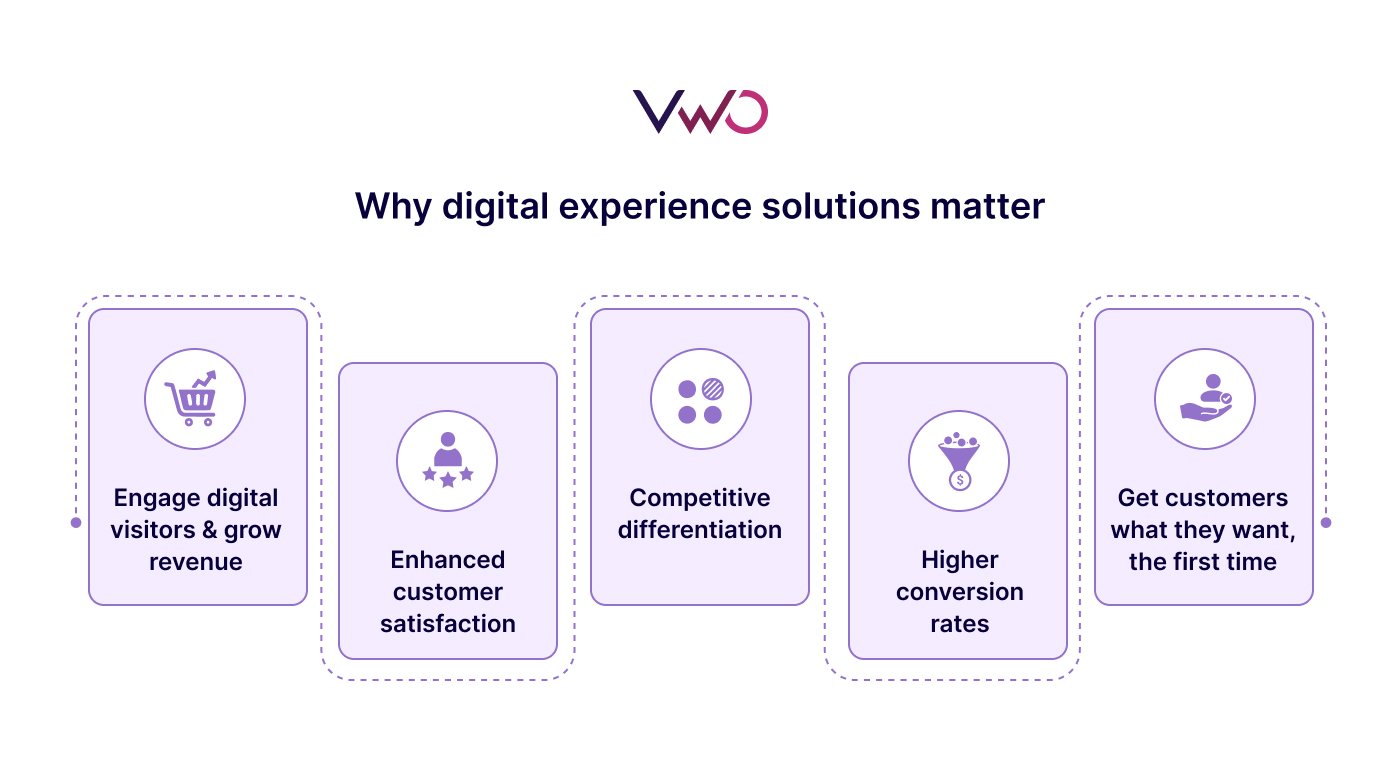
- Engage digital visitors & grow revenue – A seamless and personalized digital experience attracts visitors, reduces friction, and strengthens interactions, leading to higher engagement, repeat visits, and customer trust. By optimizing user journeys, businesses can enhance retention, build brand loyalty, and drive consistent revenue growth.
- Enhanced customer satisfaction – A well-designed user experience with intuitive navigation and personalized content leads to happier customers and stronger brand loyalty.
- Competitive differentiation – Businesses that provide smooth and engaging digital interactions stand out in the market, strengthening their reputation and appeal.
- Higher conversion rates – By streamlining the customer journey and reducing friction, digital experience solutions make it easier for users to complete purchases, sign up, or engage with content, driving more conversions.
- Get customers what they want the first time – By leveraging personalization and AI-driven insights, businesses can anticipate user needs, streamline interactions, and deliver relevant content effortlessly.
Top digital experience solutions
Best tools for digital experience solutions
Summary of the top 5 tools
| Digital Experience Solution | Features | Pricing |
| Mopinion | Conversational Feedback, Customizable Dashboards, Text & Sentiment Analysis, Automated Categorization, Collaboration, Mobile SDKs, Customizable Surveys, Intelligent Targeting | Free trial: 14 days of full access to the Standard plan.Paid: Starts from $259/month, billed annually. |
| Qualtrics | Interactive Dashboards, AI-backed Analysis, Website & App Feedback, Customer Journey Optimization, and Customer Surveys | Pricing is available on request. |
| Sitecore | Content Authoring, Marketing Automation, A/B Testing, Ai-Powered Analytics, Managed Cloud, XM Cloud | Plans and pricing are not available on the website. |
| Adobe Experience Platform | Data Collection, Data Management, Data Unification, Tags, Segmentation, AI-powered Insights, Real-time Customer Profile | Plans and pricing are not available on the website. |
| Magnolia | Pre-built connectors, Headless CMS, Personalization, AI Accelerator, A/B/n Testing, Analytics Dashboard, Custom Workflows, WYSIWYG Editor, Automation | Content Authoring, Marketing Automation, A/B Testing, AI-Powered Analytics, Managed Cloud, XM Cloud |
1. Mopinion
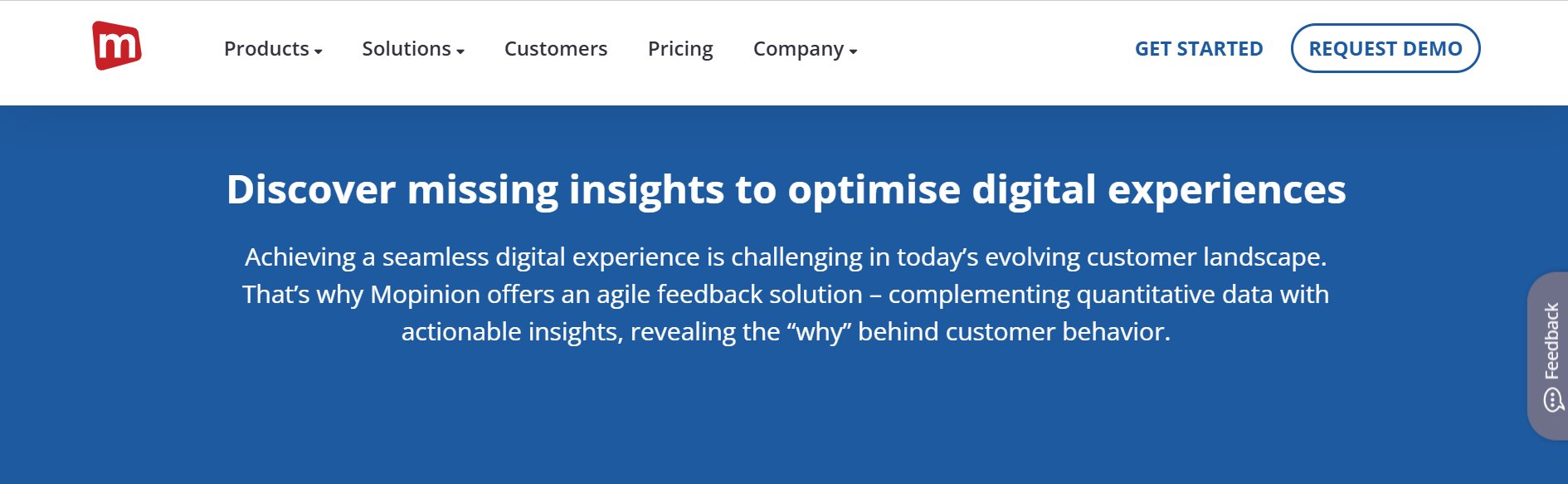
Mopinion is an all-in-one user feedback solution that helps businesses uncover the “why” behind user behavior across websites, mobile apps, and email campaigns. With AI-powered feedback summarization, trend identification, and advanced data visualization, Mopinion makes it easy to stay on top of user feedback and take action on insights that drive real impact.
By complementing quantitative data with qualitative insights, Mopinion enables digital-first enterprises to optimize user journeys, reduce friction, and enhance customer engagement and satisfaction across all digital touchpoints.
Features
Conversational Feedback, Customizable Dashboards, Text & Sentiment Analysis, Automated Categorization, Collaboration, Mobile SDKs, Customizable Surveys, Intelligent Targeting
Pros & cons
Pros:
- The platform enables businesses to measure real CX KPIs, providing valuable insights into customer experience.
- Creating and customizing feedback forms is quick and easy, allowing businesses to tailor surveys to their needs.
Cons:
- The analytics dashboard can be complex and unintuitive, making navigating and extracting insights difficult.
- Subscription plans could be better tailored to the needs of startups.
Pricing
- Free trial: 14 days of full access to the Standard plan.
- Paid: Starts from $259/month, billed annually.
Customer experience based on G2
“Mopinion is so easy to use. As a designer, I have almost full control of how the feedback module should be displayed and implemented. I can monitor the feedback by building beautiful and easy-to-use dashboards.” – Petter Andersson, Senior Product Designer at Twiceme
Quick note: See how FNB’s UX team uses contextual design and research frameworks to build trust-driven banking experiences that adapt to individual user needs across personal and business segments. Discover their approach to balancing security with personalization and how they democratize research insights across teams. Watch: FNB’s vision for contextual user experience
2. Qualtrics XM
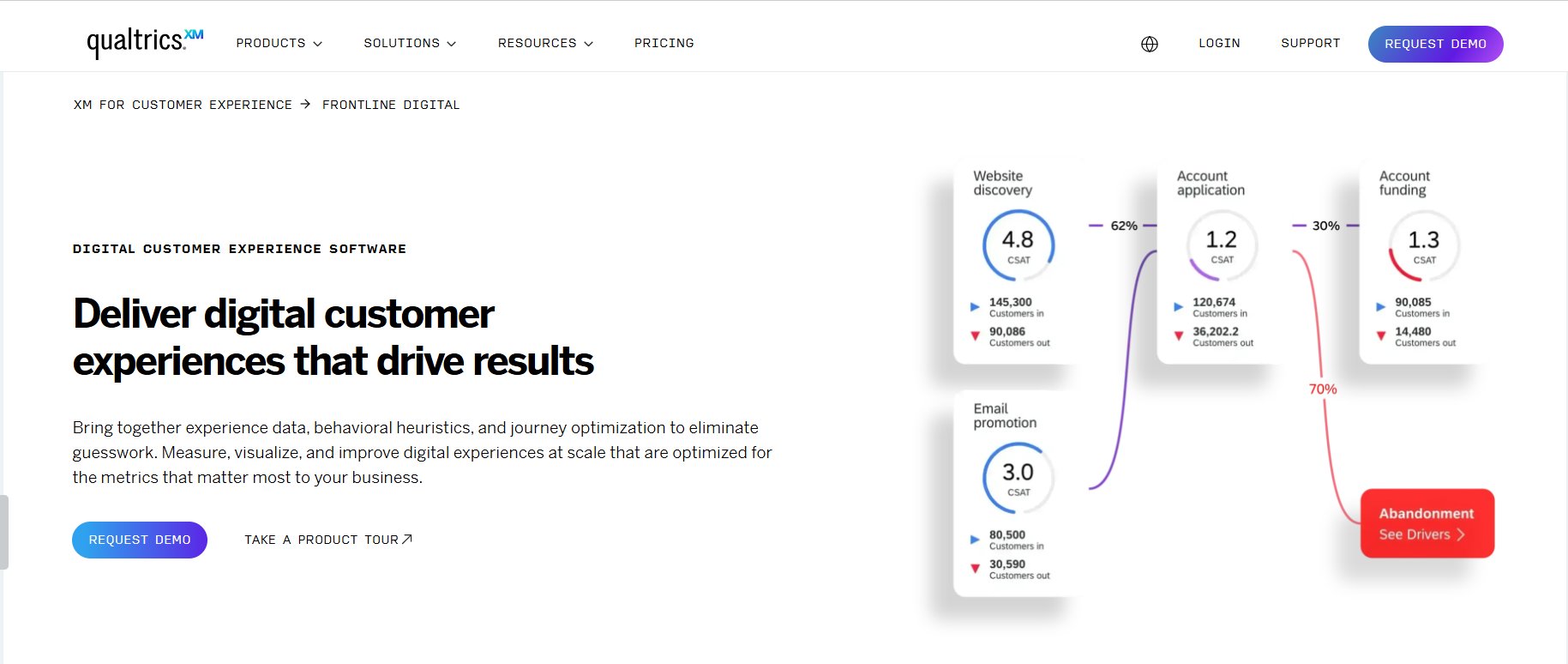
Qualtrics provides experience management software that helps businesses gather customer, product, and brand insights to drive better decisions. Qualtrics XM for Customer Experience helps with identifying friction points and equipping frontline teams with AI-driven recommendations to enhance service and engagement.
With Frontline Care, teams receive personalized guidance to improve service, while Frontline Digital analyzes customer behavior, detecting frustration signals with session replays to refine digital experiences.
Frontline Locations centralizes online reviews, connecting feedback across channels for a complete view of the customer experience. Backed by AI-powered analysis, Qualtrics helps brands turn insights into action—faster and smarter.
Features
Interactive Dashboards, AI-backed Analysis, Website & App Feedback, Customer Journey Optimization, and Customer Surveys
Pros & cons
Pros:
- The survey platform is dynamic, intuitive, and user-friendly, making it accessible even for beginners.
- The customizable dashboard offers creative flexibility, allowing users to track multiple customer experience programs effortlessly.
Cons:
- The dashboard lacks the ability to compare the same dataset across different time frames side by side and needs more flexible group-level filtering.
- Workflow automation could be improved to prevent conflicts when multiple workflows are triggered simultaneously, ensuring smoother execution.
Pricing
- Pricing is available on request.
Customer experience based on G2
“Qualtrics enables my business to gain valuable insights into the entire customer experience, from start to finish. This allows us to enhance customer satisfaction and retention.
The data we obtain from Qualtrics helps us improve our customer service procedures.” – Fiaz Hoosein, Business Intelligence and Analytics Manager at Unique Vacations Inc. – Sandals & Beaches Resorts
3. Sitecore
Sitecore DXP is a composable, SaaS-enabled platform that integrates content management, digital marketing, commerce, and analytics to help brands create and optimize personalized experiences across channels.
Sitecore’s personalization, segmentation, and real-time insights help marketers deliver relevant and tailored content at every touchpoint. It’s AI–driven automation and testing enhance engagement across emails, chatbots, and other platforms.
Designed for seamless integration, Sitecore ensures a unified digital journey, driving engagement, conversions, and long-term growth.
Features
Content Authoring, Marketing Automation, A/B Testing, AI-Powered Analytics, Managed Cloud, XM Cloud
Pros & cons
Pros:
- Sitecore offers a well-structured content management system with built-in multi-language support, making managing content for global audiences easy.
- The platform provides a low/no-code experience, allowing users of all skill levels to build and manage websites without requiring advanced technical expertise.
Cons:
- Sitecore’s documentation and integrations with platforms like Cloudflare and HubSpot could be enhanced for smoother implementation.
- The pricing and licensing structure may be less suited for smaller organizations, as costs can be higher compared to some competitors.
Pricing
- Plans and pricing are not available on the website.
Customer experience based on G2
“I appreciate that the Sitecore Digital Experience Platform is now offered as a SaaS product. Previously, it was quite complex to install, maintain, and upgrade on-premises, but with the transition to SaaS, those concerns are no longer necessary.
The platform is very user-friendly and straightforward to use. Now, the only updates we need to manage occasionally are for the front-end, specifically when a new major or minor version of Sitecore JavaScript Services (JSS) or the Content SDK is released.” – Jean-François L’Heureux, Director of Technology at Fishtank Consulting
4. Acquia
Acquia’s flexible Digital Experience Platform (DXP), built on Drupal, helps businesses create, optimize, and personalize digital experiences with AI-driven insights and automation. Acquia Cloud Platform, DAM, and PIM streamline content management, while Acquia Optimize and SEO enhance accessibility, compliance, and performance.
Designed for seamless integration, Acquia allows businesses to grow at their own pace while leveraging tools like Acquia CDP, Campaign Studio, and Convert to activate customer data and deliver high-impact experiences. With built-in testing, analytics, and personalization, brands can refine engagement strategies, expand digital reach, and drive revenue—all while ensuring security and compliance.
Features
Drupal Hosting, Content Management, AI-crafted Experiences, Marketing Automation, Customer Data Management, AI Assist, Auto-Tag, Predictive Analytics
Pros & cons
Pros:
- Acquia’s intuitive UI makes it easy for site administrators to manage development, staging, and production environments across all sites.
- The DXP enables reusable site-building components, ensuring brand consistency, security, and accessibility while improving experiences for both site builders and visitors.
Cons:
- Managing PHP plugins and configurations on Acquia Cloud can be challenging due to platform restrictions.
- Parsing updates and ensuring proper communication can be difficult, making it hard to confirm the right stakeholders are informed.
Pricing
- Plans and pricing are not available on the website. (Starts at $134/month)
Customer experience based on G2
“I’ve been using Acquia DXP for a few months now, and overall it’s been a solid experience. It’s built on Drupal, so it’s super flexible for custom content and integrations. I really like how it pulls together content, personalization, and analytics in one place.” – Jacqueline March, Social Media Marketing Manager at Grand Canyon Education, Inc.
5. Progress
Progress Digital Experience (DX) enables businesses to rapidly build, deploy, and optimize human-centered, AI-powered digital experiences across websites, apps, and other touchpoints. Designed for both developers and marketers, Progress DX simplifies content management, personalization, and automation, ensuring seamless customer engagement and enhanced business efficiency.
With Sitefinity CMS, brands can personalize content, optimize customer journeys, and leverage AI-driven insights for better conversions. Seamless data integration, real-time segmentation, and cross-channel analytics ensure rich, tailored experiences. Available in on-premises, PaaS, and SaaS models, Progress DX integrates effortlessly with existing tech stacks to drive business success.
Features
Personalization & Targeting, Analytics & Reporting, A/B Testing, Audience Analysis, Customer Journey Mapping, Customer Data Management, Heatmaps, Configurable Dashboard, Audience Segmentation
Pros & cons
Pros:
- Sitefinity is user-friendly, highly customizable, and enables seamless content synchronization to live websites with SiteSync.
- MOVEit Automation offers efficient, adaptable file transfers with an intuitive interface, advanced task programmability, and powerful scripting capabilities.
Cons:
- Workflow creation can be complex and lacks some essential functionalities.
- There is no single-click option to disable algorithms and settings across all hosts.
Pricing
- Plans and pricing are not available on the website.
6. Adobe Experience Platform
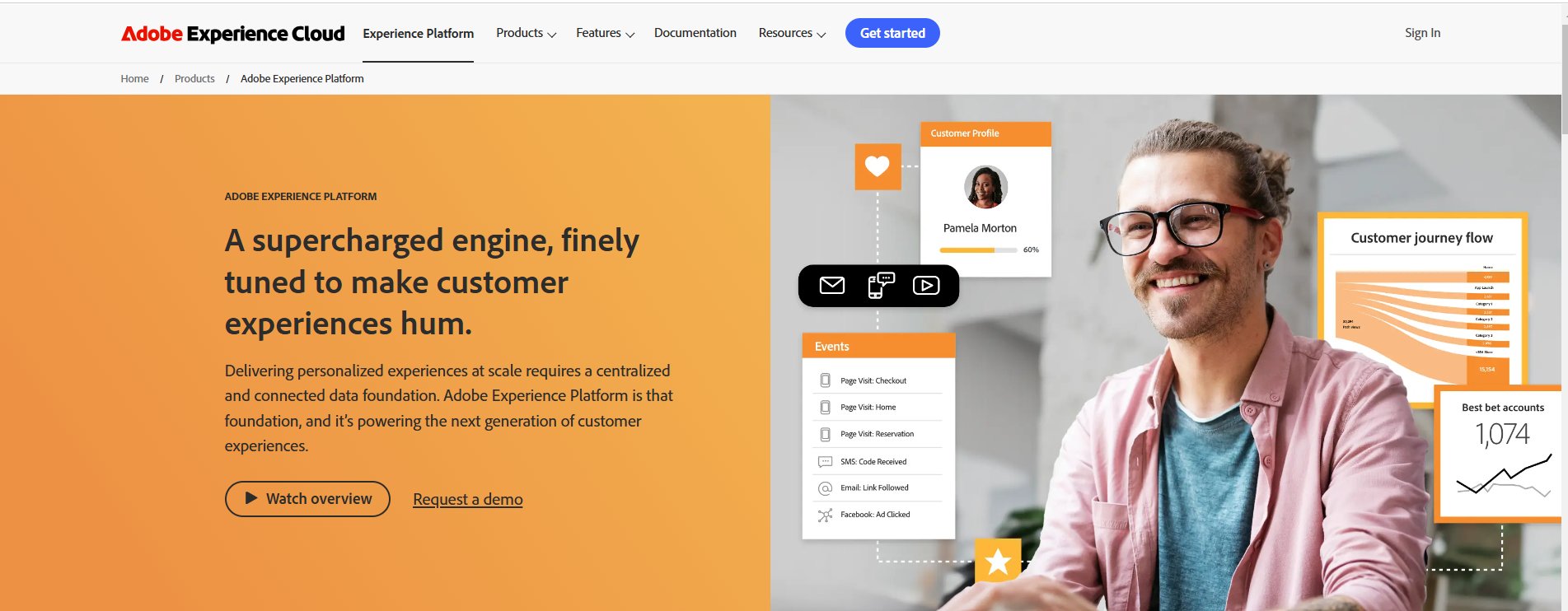
Adobe Experience Platform unifies real-time customer data from multiple sources, including CRM, transactional, behavioral, and third-party data, to create personalized, scalable experiences. As the core of Adobe Experience Cloud suite, it standardizes and activates data across channels, enabling businesses to deliver seamless, customer-centric interactions.
AI-powered automation, real-time analytics, and a unified metric framework refine audience segmentation, content personalization, and journey optimization. Tools like AI Assistant, Real-time CDP, and Journey Optimizer streamline workflows, boost engagement, and deliver measurable results.
Features
Data Collection, Data Management, Data Unification, Tags, Segmentation, AI-powered Insights, Real-time Customer Profile
Pros & cons
Pros:
- Centralized data management consolidates information from multiple channels, streamlining campaigns and user journey analytics.
- Real-time segmentation enables targeted marketing by dynamically grouping customers based on their latest interactions.
Cons:
- A steep learning curve makes it challenging for new users or small teams without dedicated technical resources.
- The tag management interface can feel clunky and outdated compared to other modern tag management systems.
Pricing
- Plans and pricing are not available on the website.
Customer experience based on G2
“There’s a lot to appreciate, but what truly stands out is the impressive combination of power and structure it provides. The DAM + Sites workflow is a significant time-saver because it keeps assets, pages, and components interconnected rather than scattered across separate silos.” – Anurag Yadav, Senior Full Stack Developer at Upstream
7. Medallia
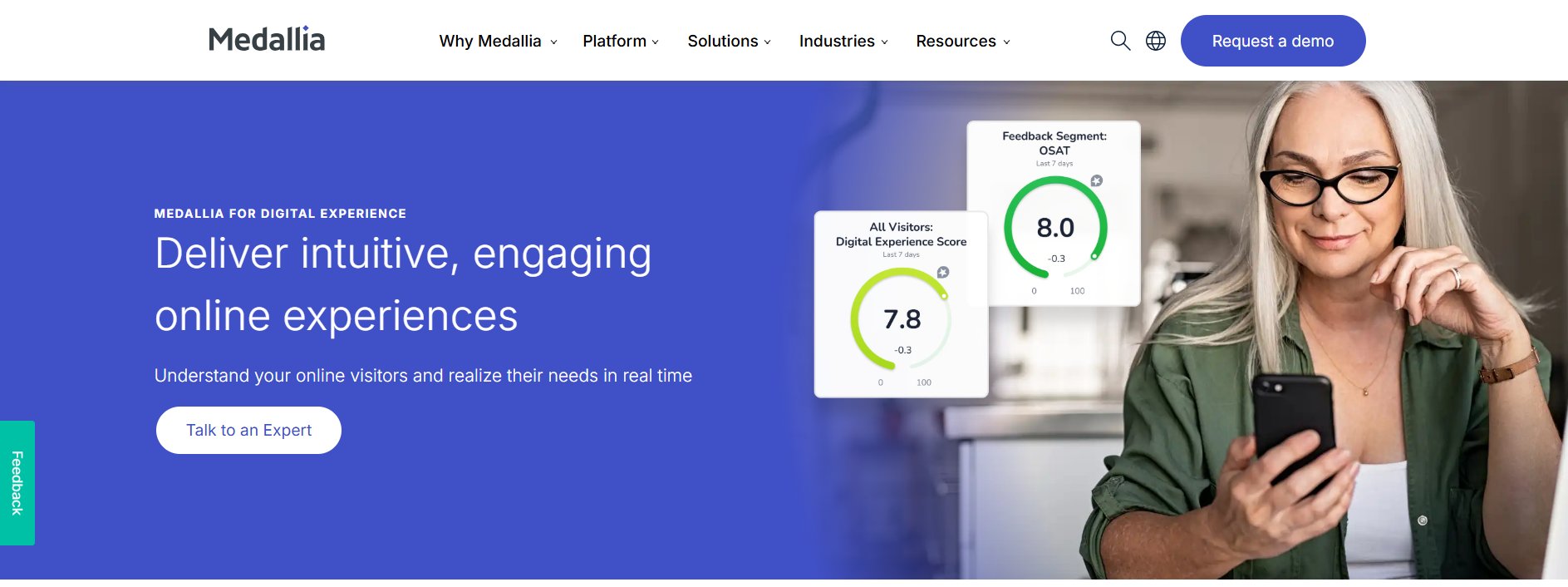
Medallia’s digital experience solutions help brands understand real-time customer behavior, ensuring frictionless, personalized online interactions. With Behavioral Intelligence, businesses can analyze session replays, heatmaps, and digital body language to pinpoint customer needs, optimize touchpoints, and reduce abandonment.
Medallia’s Athena-powered Text Analytics uses Natural Language Understanding (NLU) to uncover trends, sentiment, and effort scores from unstructured data. With Event Analytics, compound topics, and custom KPIs, businesses can track conversations, measure impact, and drive improvements with minimal effort and maximum accuracy.
Features
Event Analytics, Digital Experience Score, Personalization, Surveys, Heatmaps, Session Replays, AI Alerts, Tagging, Speech Analytics, Custom AI Analytics, Journey Analytics, Predictive Analytics, Benchmarking
Pros & cons
Pros:
- Comprehensive analytics enable data-driven decision-making and strategy development for business improvement.
- User-friendly dashboards make it easy to read and interpret feedback for actionable insights.
Cons:
- Advanced features can be complex and require a learning curve for new users.
- Admin Suite’s self-service capabilities could be expanded for greater flexibility.
Pricing
- Pricing is not available on the website. Contact sales.
Customer experience based on G2
“Medallia allows our marketing team to link genuine customer sentiment to specific aspects of our campaigns. We can filter feedback based on the delivery channel and analyze comments that pertain directly to the effectiveness of particular initiatives, such as email campaigns. This capability has fundamentally transformed how we review creative assets before a major launch.” – Angelika Motta, Service Delivery Orchestrator at PERRONE SRL
8. Magnolia
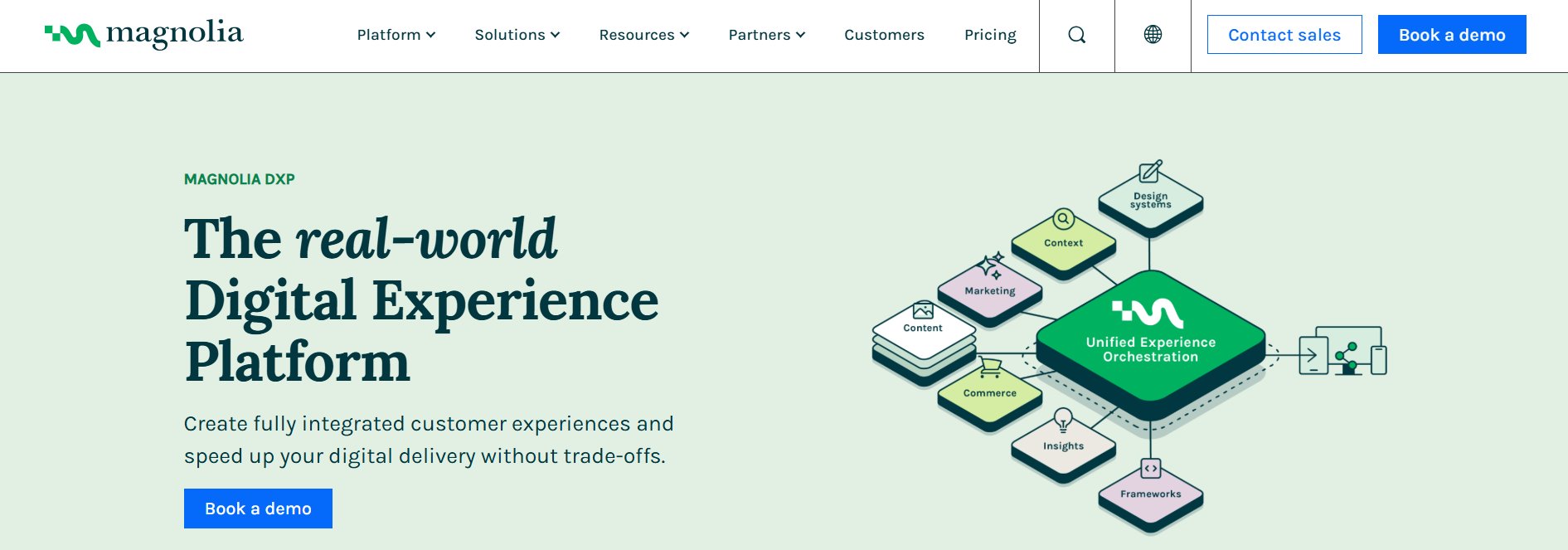
Magnolia Digital Experience Platform (DXP) enables businesses to create fully integrated, personalized customer experiences while accelerating digital delivery. With a composable architecture, Magnolia allows brands to adapt and scale by seamlessly integrating content, data, and services from legacy systems to modern Martech solutions.
It’s unified authoring experience offers a single workflow, multi-site management, omnichannel preview, and personalization, ensuring smooth collaboration and flexibility across teams. Magnolia empowers organizations to deliver dynamic, future-ready digital experiences across any channel or device.
Features
Pre-built connectors, Headless CMS, Personalization, AI Accelerator, A/B/n Testing, Analytics Dashboard, Custom Workflows, WYSIWYG Editor, Automation
Pros & cons
Pros:
- Easily adaptable and low-maintenance, allowing for a quick transition from design to implementation and greater agility in the build process.
- Connector packs simplify third-party integrations, making it easy to connect with external systems.
Cons:
- Inconsistent search functionality across modules, with some lacking proper filters and sorting options.
- Product documentation could be more detailed, as some sections provide only basic information.
Pricing
Paid: Composable DXP starts from $6000/month; Self-Hosted starts from $3500/month.
Customer experience based on G2
“Magnolia is a powerful and robust content management system designed for creating custom applications and storing data within those applications. It offers strong security features and supports multiple sites.
As an open-source platform, Magnolia provides cloud storage and multi-level security to protect your information. Additionally, it includes measures to prevent data loss, and its web-based application allows for easy access from anywhere.” – Nainish Aggarwal, Assistant Systems Engineer at Tata Consultancy Services
Optimizing digital experiences with VWO
Digital experiences shape how customers perceive brands. Every interaction, whether smooth or frustrating, impacts their journey. Businesses need continuous optimization, real-time insights, and personalized interactions to stay competitive.
A Digital Experience Platform (DXP) manages content and delivers personalized experiences, but optimization platforms like VWO ensure every touchpoint drives conversions through data-backed experimentation.
VWO Testing validates changes across A/B tests, multivariate testing, split URL tests, mobile app testing, and server-side experiments.
For example, Schuh used VWO Testing to optimize Klarna payment visibility and reposition the “Collect or Reserve” CTA, resulting in a 1.36% increase in checkout completions and a 19.7% boost in CTA conversions, enhancing the shopping experience.
VWO Insights reveals user behavior through heatmaps, session recordings, surveys, form analytics, and funnels. Greyson Clothiers used these insights to improve navigation, resulting in 5.3% more interactions and 10.5% revenue growth.
For example, Greyson Clothiers used VWO Insights to optimize collection filters and CTA usability, making navigation smoother. Heatmaps and session recordings revealed friction points, leading to clearer filters and expanded CTA areas, resulting in a 5.3% increase in interaction and a 10.5% revenue boost.

Use the Insights dashboard to gain valuable qualitative insights instantly to understand how users interact with your site and turn that data into smart improvements that boost engagement and conversions!
VWO Personalize delivers real-time customization based on behavior and intent, boosting engagement and loyalty.
For example, Orascom Hotels Management used VWO Personalize to tailor experiences for returning visitors based on their booking behavior. By creating five targeted campaigns, from “Stay Longer” discounts for multi-night searchers to location-specific offers for Egyptian visitors, they transformed generic messaging into personalized journeys. The 25-day campaign generated 153 bookings and $74,674 in revenue, with a 25% uplift in booking conversion rate.
Experience the power of data-driven digital optimization with VWO’s 30-day free trial. Test, personalize, and refine every interaction to create seamless, high-impact experiences.
“We’ve been power users of VWO for years, and it’s been an intuitive, reliable platform for quickly launching and reporting on A/B tests. Its seamless integrations with GA4 and Mixpanel help us connect experiment data with onboarding and product usage insights.
The visual editor, goal tracking, and audience segmentation features make it easy to align tests with our KPIs. Overall, VWO has been a key tool in our CRO workflow, enabling faster, smarter, and more confident decision-making.”
– Paulius Zajanckauskas,
Web Growth Lead at Omnisend
Source: VWO Success Story
How to choose the right digital customer experience solution?
Selecting the right digital experience solution is essential for businesses looking to enhance customer satisfaction and drive long-term engagement. By evaluating key factors, businesses can choose a solution that meets current needs while ensuring scalability for future growth. To make an informed decision, consider the following:
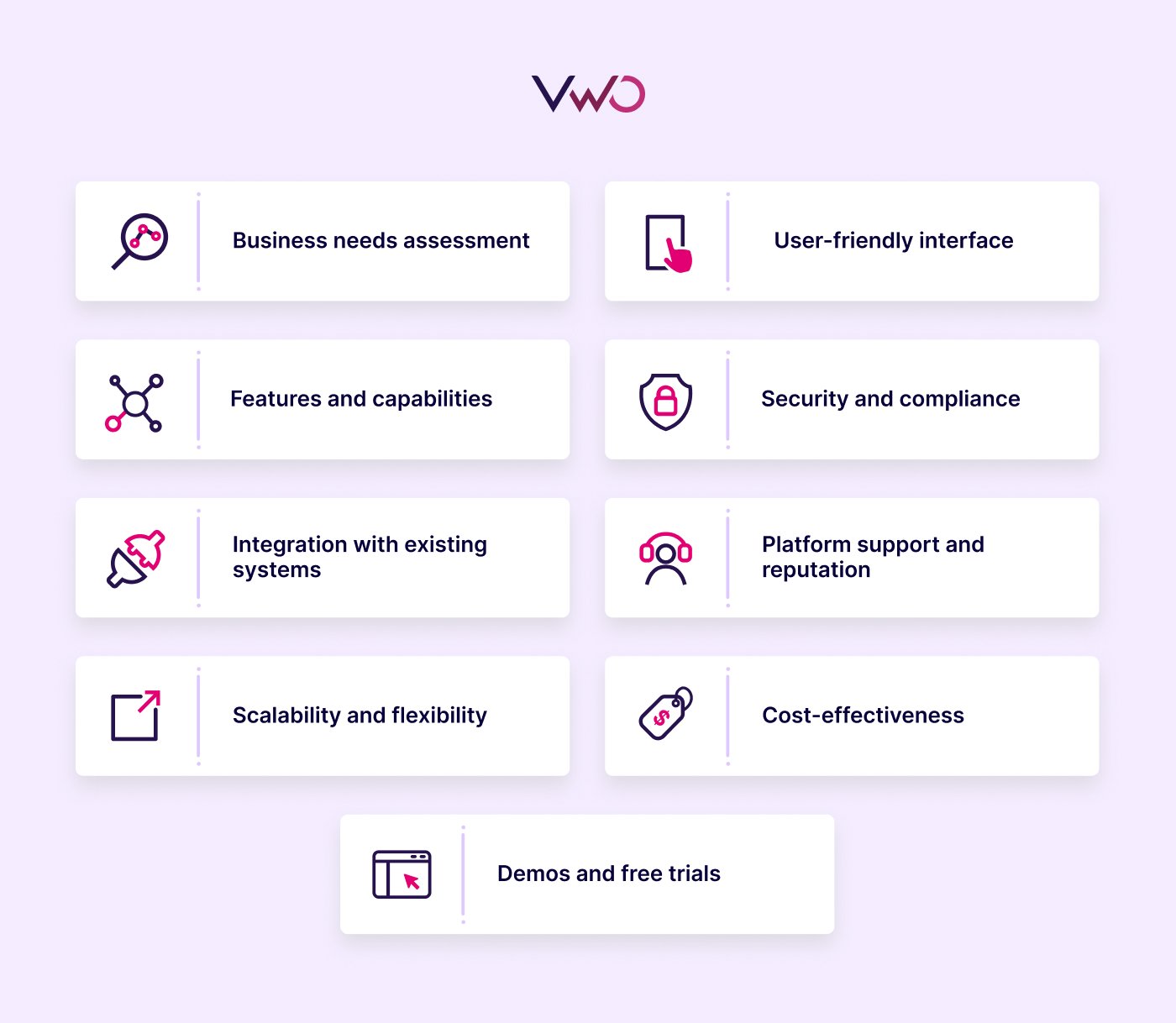
Business needs assessment: Identify your organization’s specific objectives and challenges in customer engagement. Determine whether you need to improve personalization, streamline customer service, or integrate various digital channels.
Features and capabilities: Look for platforms that offer comprehensive tools such as real-time analytics, robust content management systems, etc. Ensure the platform can provide a unified view of each customer by consolidating data from multiple touchpoints.
Integration with existing systems: The chosen platform should seamlessly integrate with your current technology stack, including CRM systems, marketing automation tools, and other customer data sources. This ensures consistency across all touchpoints and enhances operational efficiency.
Scalability and flexibility: Ensure the platform can grow with your business and adapt to future technological advancements and changes in customer behavior.
User-friendly interface: A platform with an intuitive and easy-to-navigate interface ensures that your team can quickly adapt and utilize its features without extensive training.
Security and compliance: Verify that the platform adheres to industry-standard security protocols and complies with relevant data protection regulations to safeguard customer information.
Platform support and reputation: Research the platform’s track record, customer reviews, and support services. A reliable tool will offer ongoing support and updates to keep the platform aligned with your evolving needs.
Cost-effectiveness: Factor in initial investment, recurring costs, and development resources to ensure the platform offers long-term value without excessive maintenance or customization expenses.
Demos and free trials: Take advantage of free trials or demo versions to evaluate the platform’s usability, features, and overall compatibility with your business needs before committing.
Closing thoughts
Every interaction a customer has with your brand shapes their perception and decision to stay or leave. A well-optimized digital experience isn’t just about convenience—it’s about building trust, engagement, and lasting relationships.
By choosing the right digital experience solutions, businesses can create intuitive, personalized, and high-performing digital journeys that not only meet expectations but exceed them. In an era where experience defines loyalty, the brands that prioritize seamless interactions will always stay ahead.
FAQs
Digital experience services encompass strategies, tools, and technologies that optimize customer interactions across digital touchpoints like websites, mobile apps, and social media. They focus on usability, personalization, and engagement to improve user experiences.
Digital Experience Platform (DXP) solutions are integrated systems that manage, optimize, and personalize digital interactions across multiple channels. They combine content management, customer data, AI-driven personalization, and analytics to deliver seamless user experiences.
A Customer Experience (CX) solution is a technology or platform designed to track, analyze, and improve customer interactions across digital and offline touchpoints. It helps businesses enhance engagement, satisfaction, and loyalty by providing insights into user behavior and preferences.
Digital work experience refers to the quality of employee interactions with digital tools and platforms within a workplace. It includes collaboration tools, cloud-based applications, AI-driven workflows, and employee experience platforms, ensuring efficient, seamless, and productive digital operations.
A popular example of a Digital Experience Platform (DXP) is Sitecore DXP, which provides content management, AI-driven personalization, omnichannel delivery, and analytics to create cohesive and engaging digital experiences for customers.
Categories:








![10 Best Product Management Tools [2026]](https://static.wingify.com/gcp/uploads/sites/3/2025/01/Feature-image-10-Best-Product-Management-Tools-2025.jpg?tr=h-600)