B2B buyers no longer respond to mass emails or static website journeys.
Instead, they look for brands that recognize their challenges, anticipate their needs, and speak directly to their priorities.
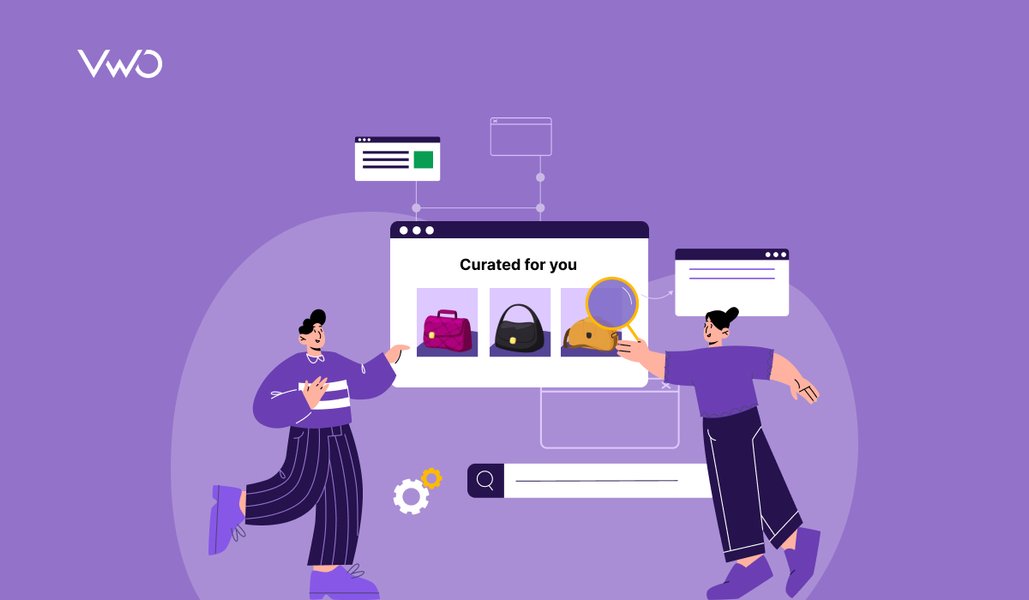
Whether it’s a customized landing page for a high-value account or a product recommendation based on previous interactions, personalization transforms ordinary outreach into meaningful engagement.
B2B buyers have more choices than ever, and decision-makers now expect the same level of relevance, convenience, and contextual understanding that they experience as consumers.
Personalization helps your brand stand out as the easy choice amidst the noise, allowing you to drive sustainable, long-term growth for your B2B business.
What is B2B personalization?
B2B personalization enables you to tailor marketing, sales, and product experiences to the specific needs and values of your target audience.
Instead of a one-size-fits-all approach, B2B personalization efforts involve creating highly relevant, customized interactions for each buyer or target account.
By leveraging customer data such as company size, industry, decision-makers, past purchases, and online behavior, you can tailor messages, offers, and entire experiences for different segments.
Why is personalization important in B2B marketing?
Let’s understand why personalization in B2B is relevant:
1. Buyers expect relevance
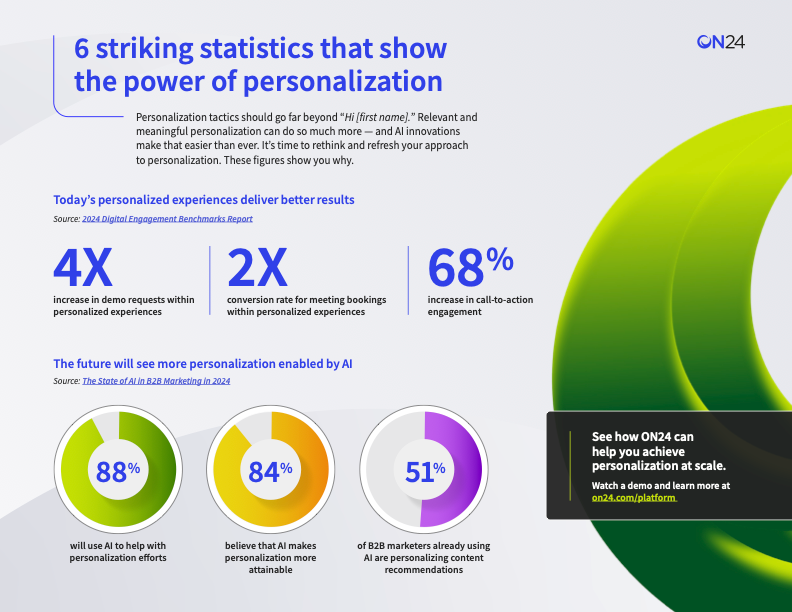
73% of B2B buyers expect a personalized, B2C-like interaction. They want experiences tailored to their specific industry, role, and stage in the buying process.
A lack of website personalization or tailored experiences often leads to frustration or disengagement among potential buyers.
2. Higher engagement and conversion
86% of B2B customers expect brands to be well aware of their personal information during interactions.
Teams can use this to their advantage by building personalized experiences that make every visitor feel seen, appreciated, and understood.
For instance, personalized site search or customized recommendations are effective strategies that often outperform non-personalized experiences in trials and surveys.
3. Shorter sales cycles
Tailored solutions, targeted outreach, and content that addresses the buyer’s pain points can reduce friction in the evaluation process.
This, in turn, speeds up the decision-making process and helps buyers improve pipeline velocity.
Personalization helps B2B brands stand out when product features converge.
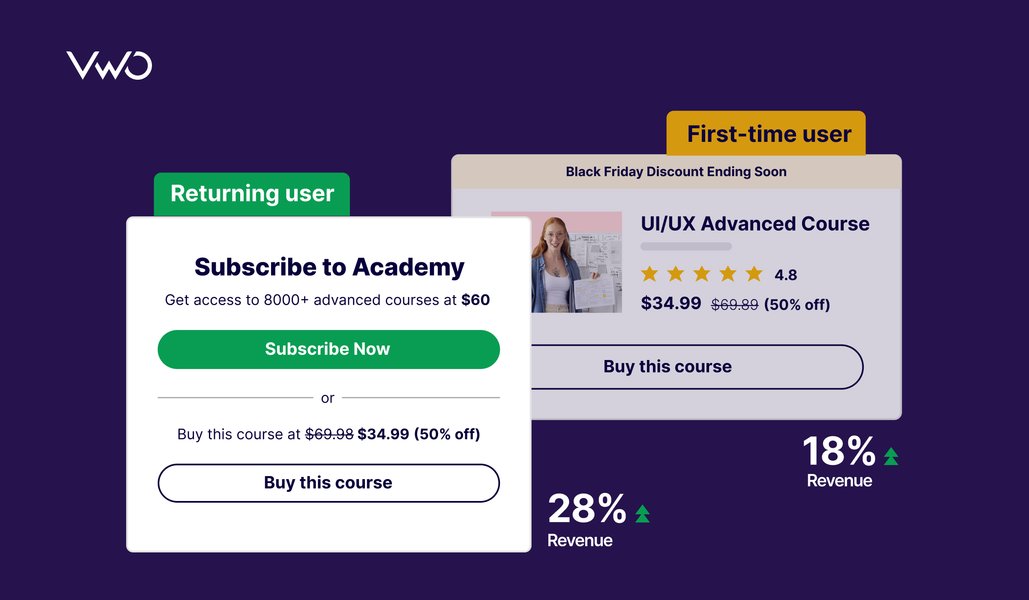
When buyers encounter tailored content, demos, or offers that directly reflect their preferences or challenges, they’re more likely to remember and trust the brand.
Personalization can help you go from “just another vendor” to “partner who understands our challenges.”
5. Better ROI from martech and content
B2B organizations invest heavily in marketing automation, CRM systems, and content creation, but much of that spend remains underutilized due to generic campaigns.
Targeted content and paid campaigns reduce wasted impressions and increase conversion efficiency.
Every dollar spent on martech or media produces higher pipeline impact and clearer attribution.
Understanding the differences between B2B and B2C personalization
B2B and B2C personalization share the same goal—delivering relevance—but their execution differs significantly.
B2C targets individual impulses while B2B spans buying committees, roles, and stages across a longer evaluation journey.
Let’s understand the core differences between B2B and B2C personalization:
Key difference features
B2B personalization
B2C personalization
Decision-maker
Multiple stakeholders with different roles within an organization.
A single individual making a personal purchase.
Customer-journey
Long, complex, and non-linear, it involves research and multiple approvals.
Shorter and more linear, with a stronger emphasis on impulse and emotional buying.
Data
Heavy focus on account-based data, such as: – Account history – Industry – Role-based needs
The data used here is: – Individual purchase history – Demographics – Behavioral data
Goals
Build long-term relationships and manage high-value purchases or conversions.
Drive immediate sales and brand loyalty.
Approach
Messaging based on buying-committee roles Pricing or plans tailored to match company size Personalized dashboards
Messaging based on individual browsing and purchase history Targeted discounts Customized product recommendations
Key metrics
Custom lifetime value (CLV) Customer retention Revenue per visitor
Average order value (AOV) Repeat purchases Brand engagement
Implementing personalization in your B2B strategy: A step-by-step approach
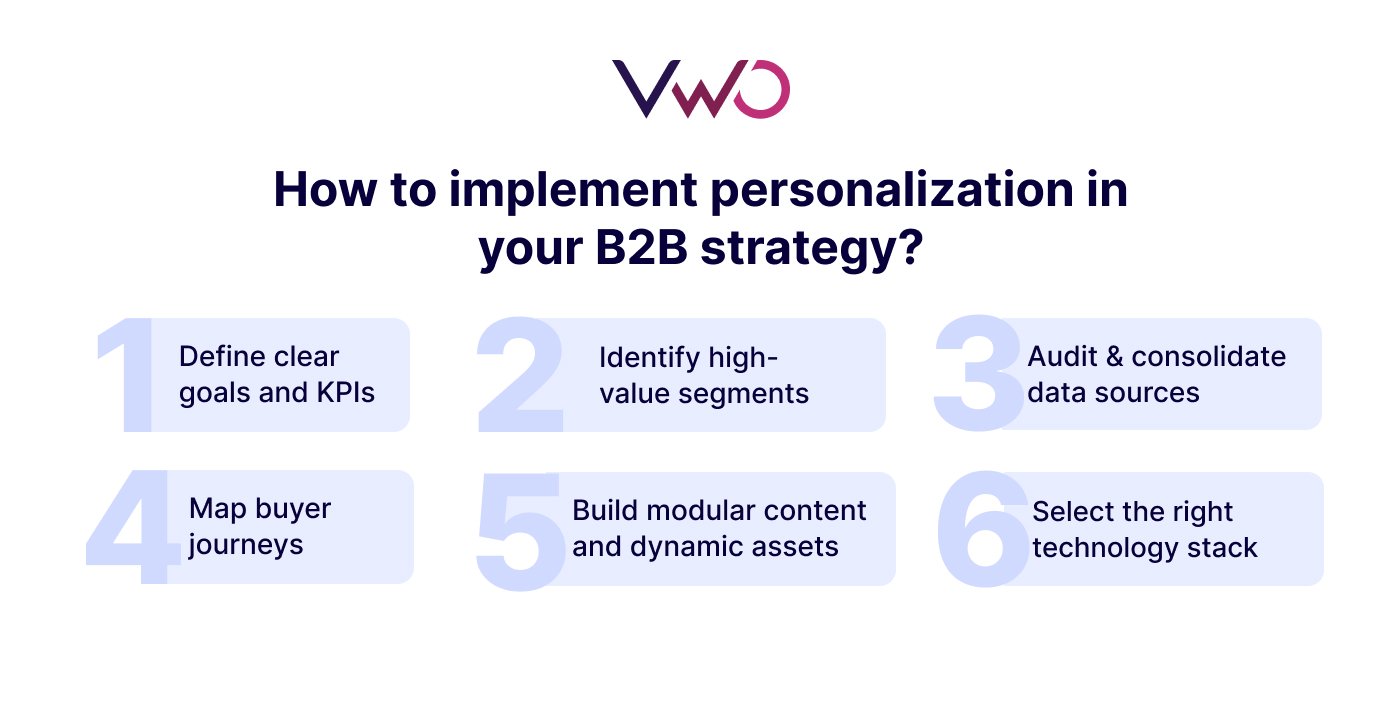
Here are the concrete steps you can follow to implement and scale personalization in your B2B strategy.
1. Define clear goals and KPIs for your personalization strategy
Start by prioritizing the metrics you want to track and improve. It can be free trial leads, demo requests, pricing page clicks, or even renewals and retention.
Then map KPIs, such as MQL and SQL conversion rates and demo-to-opportunity rates, to each goal.
Also, set a benchmark for each goal so you can measure the impact of your personalization efforts.
2. Identify high-value accounts and segments
Leverage data from CRM, firmographics (including industry and company size), demographic data, intent signals, and the current pipeline to build prioritized account lists.
Personalizing the experiences for high-value accounts first is also an effective strategy.
Earlier, data analysis relied heavily on factors like batch processing, which meant every insight came from historical data. Today, you’ve got real-time streaming analytics that enable you to instantly react to user behavior, making it easier to personalize content on the fly.
Divide your target audience into distinct, highly specific segments or “micro-segments” based on the collected data.
Develop detailed buyer profiles for each segment, focusing on their unique pain points, goals, and challenges.
The best approach is to consolidate all this data into a single customer view or CDP, as it enables you to act on unified signals.
4. Map buyer journeys and personalization opportunities
For each account segment, map typical touchpoints and identify where personalization will influence outcomes the most. For instance, some key B2B touchpoints include:
Home page
Pricing page
Content offers
Demo CTAs
You can start by focusing on low-friction wins, such as replacing the hero message or account-specific CTAs.
5. Build modular content and dynamic assets
Create content blocks and assets that can be used dynamically and efficiently.
These could be industry case studies, role-based value props, configurable CTA modules that enable you to scale personalization without bespoke content for every account.
6. Select the right technology stack
B2B personalization feels like a piece of cake when you have the right tech stack in place.
For instance, tools like VWO Data360 capture customer data from multiple sources and unify it in a single view, building a holistic profile of your customers.
You can leverage this data to craft and deliver personalized experiences to visitors based on their behavior, demographics, and other key attributes.
VWO also supports experimentation and behavioral analysis, making it an all-in-one platform to test, analyze, and validate what works for each audience segment.
Pro Tip!
Use VWO Personalize to customize specific elements, such as banners or CTAs, based on visitor segments to guide them to the most relevant steps. This enables you to build highly targeted experiences and guide each visitor based on their intent or role.
Challenges in B2B Personalization
While the promise of personalization is immense, executing it effectively in B2B environments is far more complex than in B2C.
Here are the most common roadblocks brands face while executing personalized B2B experiments:
1. Fragmented customer data
B2B data often lives across disconnected CRMs, email systems, and ad platforms. Without unified data, personalization becomes inconsistent.
If you try to analyze your entire website, you might end up with fragmented insights. Instead, solve one problem at a time. Pick a specific drop-off that’s costing you the most. Treat it as your starting point and then dive deeper.
Unlike B2C, B2B purchase decisions involve multiple stakeholders and long evaluation cycles. Crafting tailored experiences for every persona is challenging.
3. Limited technology integration
Many organizations invest in martech tools but fail to connect them effectively, which results in siloed insights.
4. Scalability challenges
Personalizing for a handful of accounts is easy; scaling that level of relevance to hundreds or thousands isn’t.
Key strategies to drive effective B2B personalization
Here are some of the essential strategies that help drive B2B personalization:
1. Account-based marketing (ABM)
Tailor marketing campaigns and messaging to high-value target accounts.
2. Buyer persona segmentation
Personalize by role, industry, and stage in the buyer journey.
3. Dynamic website personalization
Serve relevant content, CTAs, and case studies based on visitor attributes.
4. Intent data utilization
Utilize behavioral signals to deliver timely and relevant messages.
5. Personalized email campaigns
Ensure content is aligned with the prospect’s needs and engagement level.
6. AI-driven recommendations
Leverage predictive analytics and machine learning algorithms to suggest products, content, or next steps.
7. CRM and marketing automation integration
Sync customer data for unified personalization across touchpoints.
8. Customized sales enablement
Equip sales teams with tailored insights and messaging for each prospect.
9. Retargeting campaigns
Re-engage prospects with personalized ads based on prior interactions.
10. Post-sale personalization
Offer customized onboarding, education, and support experiences to drive customer loyalty and customer satisfaction.
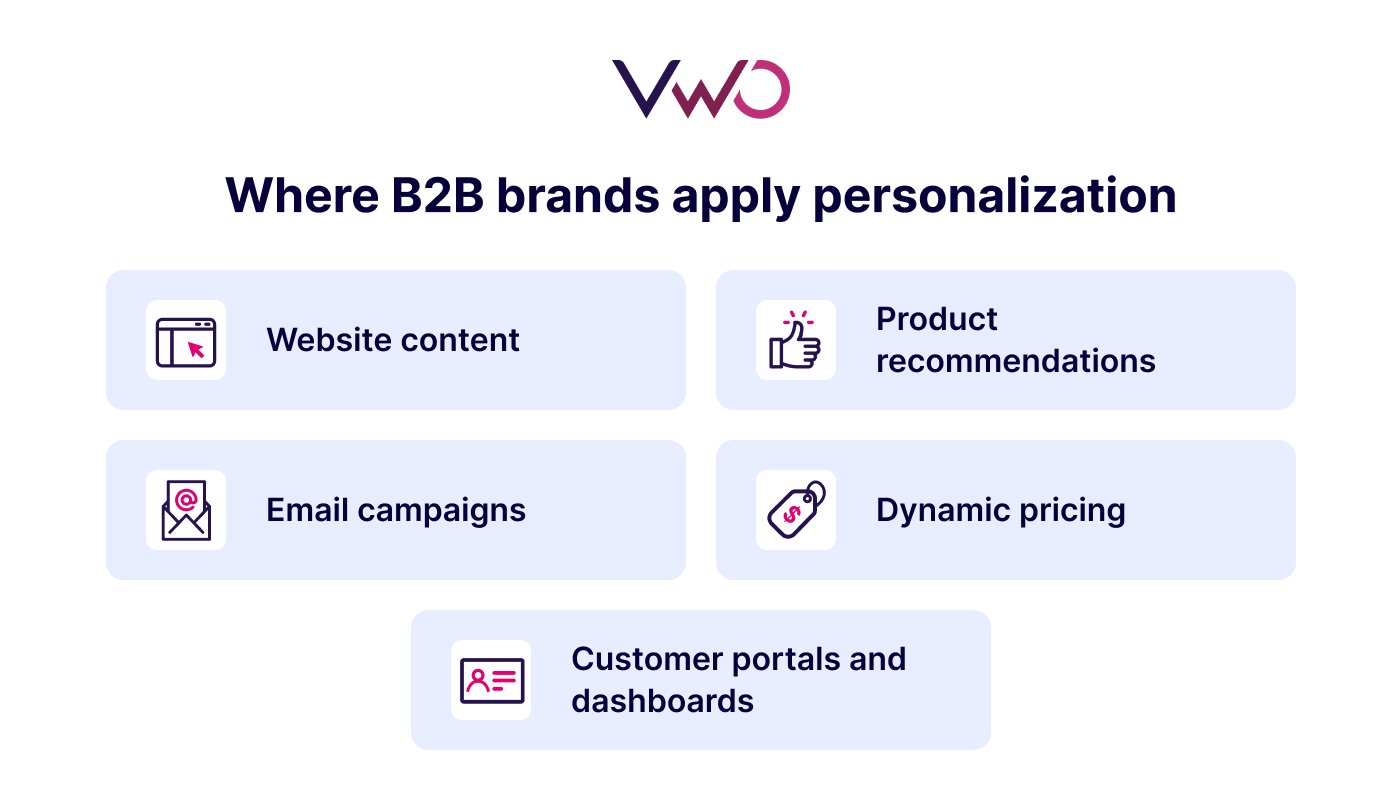
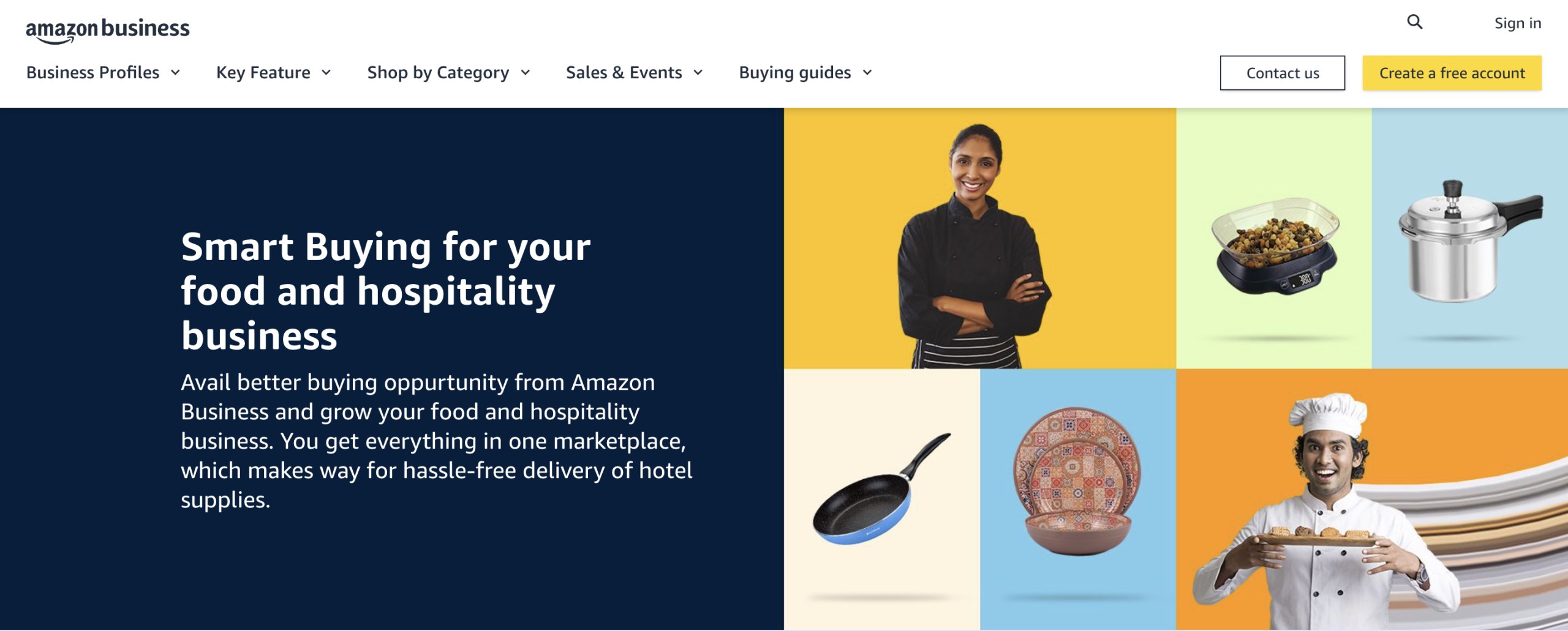
B2B marketplaces and SaaS platforms, such as Amazon Business or Shopify Plus, recommend products, tools, or integrations based on specific industries or customer profiles.
4. Dynamic pricing and custom quotes
Enterprise software and supply platforms use personalized pricing based on account type, volume, or engagement level.
5. Personalized customer portals and dashboards
Post-purchase personalization enables brands like Zendesk and Atlassian to tailor analytics dashboards and renewal prompts specifically for each customer.
Wrapping up
When brands tailor every touchpoint to the right audience, they not only take a step towards shortening sales cycles but are also more prepared to build long-term trust and advocacy.
This is where website personalization and experimentation play a critical role.
VWO enables teams to personalize on-site experiences based on customer behavior and, just as importantly, test and validate them through experimentation.
Instead of relying on assumptions, teams can learn what actually works for different audiences.
While true B2B personalization requires a broader tech stack, experimentation is essential to making it effective.
Schedule a demo with VWO to see how you can experiment with and optimize personalized on-site experiences at scale.
FAQs
Q1. How can personalization improve B2B lead generation?
Personalization enables B2B marketers to target leads with precision, rather than relying on volume. By utilizing firmographic and behavioral data, businesses tailor their outreach to specific industries, company sizes, and buyer intent.
Q2. How can B2B companies leverage personalized content to drive effective marketing and sales strategies?
B2B companies use website personalization to align marketing efforts and sales messaging across every stage of the buyer journey. Customized landing pages for target accounts Dynamic email campaigns tailored to specific roles or buying stages Customized case studies for each industry segment
Q3. Why is personalization important in B2B marketing?
In B2B, website personalization drives relevance, trust, and customer satisfaction, factors that heavily influence complex buying decisions. Unlike B2C, B2B deals involve different stakeholders and longer cycles, making tailored messaging critical for nurturing each decision-maker.
Q4. What is personalization in B2B eCommerce?
B2B eCommerce personalization involves dynamically customizing digital experiences such as pricing, recommendations, and product visibility based on customer type, history, or contract terms. For example, a distributor might see wholesale pricing and bulk discounts tailored to their region.
Hi, there! I’m an Associate Manager of Content at VWO with 6 years of experience in B2B and B2C marketing. I work across blogs, SEO, thought leadership, newsletters, landing pages, and a video podcast I built and manage from scratch. At VWO, I’ve gained expertise in CRO, experimentation, user behavior research, and personalization, creating content that makes complex ideas clear and actionable. Outside of work, I enjoy experimenting with memes and short-form video on Instagram.
Uncover hidden visitor insights to improve their website journey
One of our representatives will get in touch with you shortly.
Awesome! Your meeting is confirmed for at
Thank you, for sharing your details.
, you're all set to experience the VWO demo.
I can't wait to meet you on at
Account Executive
, thank you for sharing the details. Your dedicated VWO representative, will be in touch shortly to set up a time for this demo.
We're satisfied and glad we picked VWO. We're getting the ROI from our experiments.
Christoffer Kjellberg
CRO Manager
VWO has been so helpful in our optimization efforts. Testing opportunities are endless and it has allowed us to easily identify, set up, and run multiple tests at a time.
Elizabeth Levitan
Digital Optimization Specialist
As the project manager for our experimentation process, I love how the functionality of VWO allows us to get up and going quickly but also gives us the flexibility to be more complex with our testing.
Tara Rowe
Marketing Technology Manager
You don't need a website development background to make VWO work for you. The VWO support team is amazing
Elizabeth Romanski
Consumer Marketing & Analytics Manager

 DE
DE
 BR
BR




 ChatGPT
 Perplexity
 Gemini
 Claude
 Grok
Grok